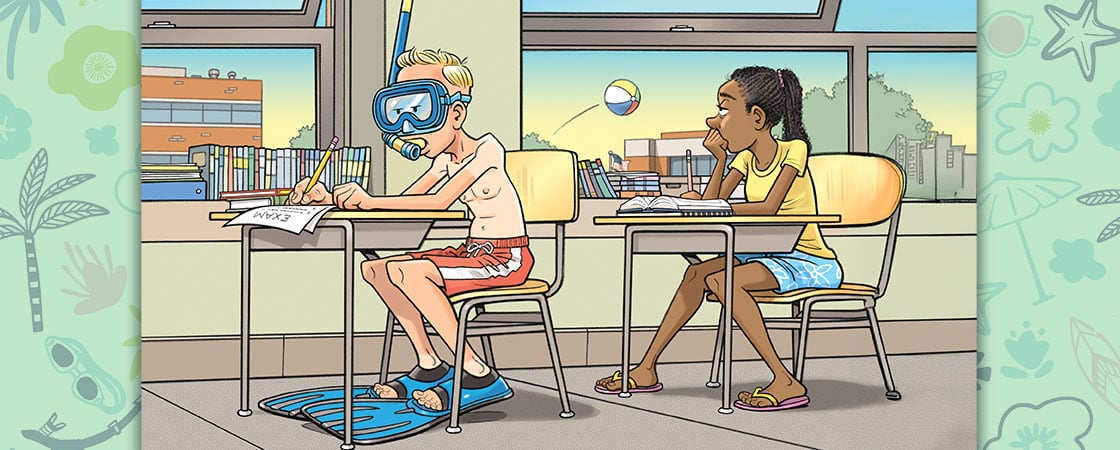
If you haven’t heard much about year-round schools, it’s probably because only about 4 percent of U.S. public schools operate on a year-round schedule. But some educators are saying that more should. Why? According to some studies, Americans lag behind their peers in countries like Japan and Ireland. Keeping schools open all year could be one way to help U.S. students catch up.
Before you run off to a desert island, keep in mind that year-round schools have roughly the same number of vacation days as schools with traditional calendars. The days off are just organized differently. Summer break is usually shortened to about four weeks. The remaining vacation time gets spread out over the rest of the year, with students getting a few weeks off in the fall, winter, and spring.
And that extra time off during the school year can be a big stress reliever. “We work hard,” says Hansika Nallavelli, a ninth-grader in Minnesota. “This would give us more to look forward to throughout the year.”
Reorganizing the year can have academic benefits too. It can mitigate summer learning loss—that is, forgetting what you’ve learned from the prior school year. Many year-round schools also offer optional activities during vacation weeks. Students can take creative classes ranging from karate to screenwriting, or get extra help in tricky subjects.
On the other hand, learning doesn’t have to stop for kids on long summer breaks. Activities like making TikToks, taking family trips, shooting hoops, and reading can be extremely enriching.
One downside to year-round schools? The logistics. In fact, some districts have tried year-round schedules only to switch back when they became too complicated. Try setting up a soccer game with another school when you’re on a break every few weeks or so. Arranging family vacations can be difficult too, especially if siblings are on different school schedules.