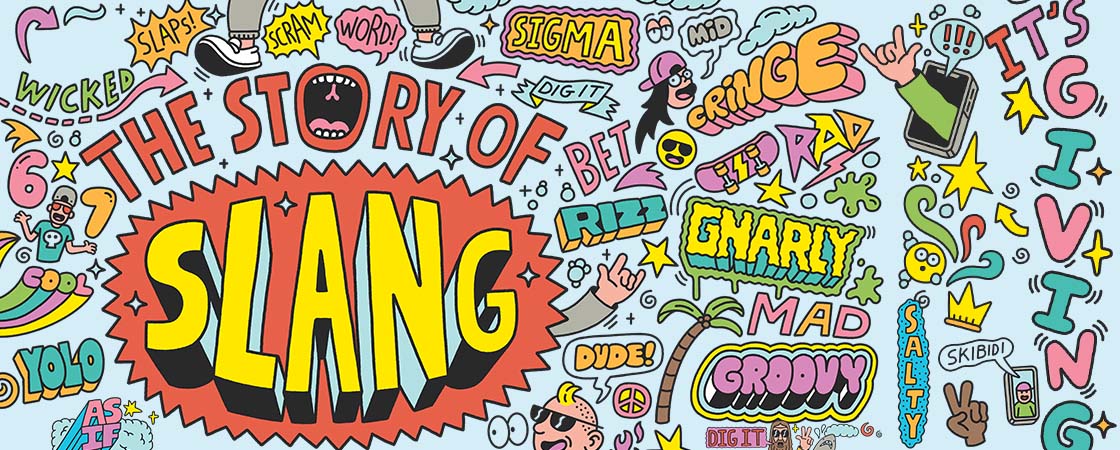
Your generation certainly isn’t the first to use slang. In fact, most generations have developed their own vocabulary—from bummer and far out in the ’70s to my bad and phat in the ’90s.
But how did all these slang words come to be?
Historically, most slang words came from literature. For example, in the 1600s, the famous playwright William Shakespeare was immensely popular. People would see or read his plays and repeat certain words and phrases from his work, like fair play and swagger. In the 1800s, Jane Austen gave us slang words like dirt cheap and grown-ups, while Charles Dickens popularized butterfingers, doormat, and the creeps.
As more people learned to read, and more books and plays were published, more slang emerged. Then, beginning in the 1940s and continuing through the 1980s, slang exploded. Thanks to the arrival of new kinds of media—like radio, television, and movies—people started picking up slang from more places, like their favorite actors, athletes, or songs.
Many of the American slang words that emerged, and that are still popular today, come specifically from African American Vernacular English (AAVE). That’s language rooted in Black culture and communities, especially from sports, music, and fashion. And most of these terms have been around for a long time, though some meanings have been lost or changed along the way.
The word slay, for example, is rooted in early-1900s Black fashion culture, says Bovaird-Abbo. People used it to refer to a great outfit. Now, she says, the word “is a broader term for someone who’s killing it, or feeling empowered.”