
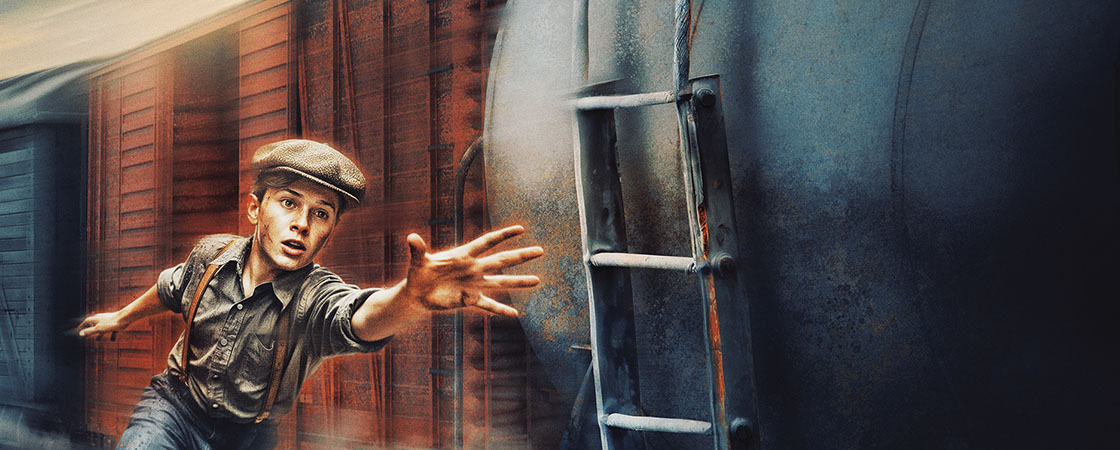


A boy in a cap reaches toward a moving train beside a red boxcar
Illustration by Randy Pollak

Riding to Survive

During one of the most desperate times in America, 250,000 kids hopped aboard trains to try to make it on their own. This is their incredible true story. 

By Kristin Lewis
From the April 2026 Issue

Learning Objective: to identify the central ideas in a narrative nonfiction article, then demonstrate their understanding by designing a board game that represents those ideas

Lexiles: 910L, 740L

Standards

AS YOU READ

Think about why boxcar kids like Robert left home.

In the summer of 1934, 13-year-old Robert Symmonds found himself chasing an enormous freight train. His plan was to hop onto one of the moving cars without getting caught by the railroad police—and without getting sucked onto the tracks, where he could be crushed. 

Luckily, the train was moving slowly. Robert reached out for the ladder on a tank car and, gripping tightly, hoisted himself up. Attached to the side of the car was a narrow wooden plank. Robert sat down on it. There wasn’t much to grab on to—only a small metal bar. At least he was safe.

But not for long.

The train began picking up speed. The wind whipped past Robert’s face as the train approached 40 miles an hour, then 50, then 60. As the train moved faster, the teen’s weight on the plank caused it to start bouncing like a springboard. As the board bounced him higher and higher, Robert struggled to hang on.

Terrified, he wished with all his heart that he’d never jumped on the train. Who knew how long he could hold on?

If he lost his grip and tumbled off, his fate was almost certain. He would fall onto the tracks and be run over—or if he was lucky enough to miss them, he would break his neck as he hit the ground. 

As the minutes ticked past, Robert pictured his mother in his mind. He imagined her reaction when she found out that her beloved son had been found dead along the railroad tracks. Dear God, please don’t let me fall, he prayed. 

Finally, after what seemed like forever, the train began slowing down. The bouncing ceased. Miraculously, Robert had managed to hold on until they reached the next stop. By then, he was so exhausted he could barely walk. 

But that didn’t stop him from sneaking into a boxcar a few train cars back. 

There was no way he was going to give up that easily.

It was the summer of 1934. Robert Symmonds was 13. He was chasing an enormous freight train. He wanted to hop onto one of the moving cars. But he didn’t want the railroad police to catch him. And he didn’t want to get sucked onto the tracks and be crushed.

Luckily, the train was moving slowly. Robert reached out for the ladder on a car. He pulled himself up. A narrow wooden plank was attached to the outside of the car. Robert sat down on it. There was only a small metal bar to hold on to. At least he was safe.

But not for long.

The train began picking up speed. It went 40 miles an hour, then 50, then 60. As the train moved faster, Robert’s weight made the plank bounce like a springboard. Robert struggled to hang on.

Terrified, he wished that he’d never jumped on the train. Who knew how long he could hold on?

If he lost his grip and tumbled off, his fate was almost certain. He would fall onto the tracks. He’d be run over. If he was lucky enough to miss the tracks, he would break his neck as he hit the ground.

The minutes ticked past. Robert thought about his mother. He imagined her reaction when she found out that her beloved son had been found dead along the railroad tracks. Dear God, please don’t let me fall, he prayed.

Finally, the train began slowing down. The bouncing stopped. The train came to its next stop. By then, Robert was so exhausted he could barely walk.

Even so, he snuck into a boxcar a few train cars back.

There was no way he was going to give up that easily.

Penniless, Homeless

Penniless, Homeless

In the 1930s, more than 250,000 young Americans stowed away on freight trains across the nation. Hopping from train to train and drifting from town to town, they were known as “boxcar children.” Some simply sought adventure­—like Robert that day in 1934. But most boxcar children rode in search of work, their families impoverished and unable to care for them. 

No matter where they came from or where they were headed, however, they all came to understand one brutal truth: Life on the rails was treacherous.

Why did so many young people risk their lives and endure the harsh reality of traveling by freight train during this time? The 1930s were a time of extreme hardship in the United States, now known as the Great Depression. In late 1929, the stock market crashed, setting the stage for a decade of financial disaster. Factories shut down. Farmers couldn’t sell their crops. Banks failed, causing many families to lose their life savings. By 1932, one in four American workers were jobless. Hundreds of thousands of people were forced to roam the country—by any means necessary—in search of a meal, a place to sleep, and employment. To this day, this period remains the longest and most brutal economic depression in American history.

Like so many others, Robert and his family were hit hard. His dad had been a successful business owner. The family lived in a nice house in Seattle, Washington, and there was always food on the table. Then, in 1938, Robert’s father lost everything. It wasn’t long before the family was penniless and homeless. A relative offered them a cabin in Oregon, but life wasn’t any better there. There was no running water, no electricity, and no money.

So, at age 16, Robert decided it was up to him, the only son, to save his family. He had seen young people riding in the boxcars of trains that passed through town, and he had hopped plenty of trains himself—just for fun. But those joy rides had been relatively short. And never before had his family depended on his rides being a success.

This time, as Robert hiked to the rail yard, things were different. He planned to ride south and get a job harvesting crops—if he could survive the journey.

In the 1930s, more than 250,000 young Americans stowed away on freight trains across the nation. They hopped from train to train and drifted from town to town. They were known as “boxcar children.” Some were looking for adventure—like Robert that day in 1934. But most boxcar children were looking for work. Their families were impoverished and could not care for them.

However, no matter where they came from or where they were headed, they all came to understand one brutal truth: Life on the rails was treacherous.

Why did so many young people risk their lives this way during that time? The 1930s were a time of extreme hardship in the United States. It is now known as the Great Depression. In late 1929, the stock market crashed. That led to a decade of financial disaster. Factories shut down. Farmers couldn’t sell their crops. Banks failed. Many families lost their life savings. By 1932, one in four American workers were jobless. Hundreds of thousands of people were forced to roam the country in search of a meal, a place to sleep, and employment. To this day, this period remains the longest and most brutal economic depression in American history.

Like so many others, Robert and his family were hit hard. His dad had been a successful business owner. The family lived in a nice house in Seattle, Washington. There was always food on the table. Then, in 1938, Robert’s father lost everything. Soon, the family was penniless and homeless. A relative offered them a cabin in Oregon. But life wasn’t any better there. There was no running water, no electricity, and no money.

So, at age 16, Robert decided it was up to him, the only son, to save his family. He had seen young people riding in the boxcars of trains that passed through town. He had hopped plenty of trains himself—just for fun. But those joy rides had been short. And his family had never depended on his rides being a success. 

This time, things were different. Robert planned to ride south and get a job harvesting crops—if he could survive the journey.

Chronicle/Alamy Stock Photo (train); AP Images (boxcar kid)

Life on the rails wasn’t easy. Boxcar kids faced violence, hunger, and illness—all while learning to survive on their own.

Thrilling Adventure?

Thrilling Adventure?

By the 1930s, boxcar kids had become a national phenomenon. Newspapers wrote about them. Magazine articles offered advice on how to survive on the rails. A movie was even made on the subject.

Though the articles usually stressed that a boxcar was no place for a kid to live, many teens across America found these tales utterly thrilling. They pictured stopovers in glamorous big cities, warm summer nights rolling through windswept prairies, and crisp fall mornings as the trains slowly climbed through thickly forested mountain passes. 

On a train, they imagined, they would be free, making their own way in the world. Many teens—­even those who had plenty to eat at home—found the idea so alluring that they ran away to hop trains.

By the 1930s, boxcar kids had become a national phenomenon. Newspapers wrote about them. Magazine articles offered advice on how to survive on the rails. A movie was even made on the subject.

The articles usually stressed that a boxcar was no place for a kid to live. But many teens across America found these tales thrilling. They pictured stopovers in glamorous big cities, warm summer nights rolling through windswept prairies, and fall mornings as the trains climbed through forested mountain passes.

On a train, they imagined, they would be free, making their own way in the world. Many teens—even those who had plenty to eat at home—found the idea alluring. So they ran away to hop trains.

Grim and Dangerous

Grim and Dangerous

But boxcar kids soon discovered that the reality of riding the rails was far more grim and dangerous than what they had read about. Danger lurked everywhere, even before a teen stepped onto a train. The rail yards were patrolled by “bulls,” guards paid by the railroad companies. These men could be vicious, often beating teens they caught before hauling them off to jail. Some even stole what little money the boxcar kids had.

But the greatest danger was the trains themselves—thousands of tons of metal speeding along the tracks. Newspapers were full of gruesome stories about people who were injured or killed while hopping trains. A fall from a boxcar roof could result in a broken arm, leg, or neck. A foot or a leg that slipped beneath a train’s wheels would be instantly severed. There was also the potential hazard of being sucked under a train and crushed. Indeed, from 1929 to 1939, nearly 25,000 train hoppers died. 

Those who managed to survive the train rides frequently faced hunger and illness. They might go days without food. Weakened by starvation and cold, many became sick with diseases like pneumonia. They would wander into towns, ragged and filthy. They would beg for food or try to get short-term jobs in exchange for a few cents or a cup of coffee. But residents of the towns often had their own hardships to deal with. Many simply couldn’t cope with more mouths to feed. “Go home to your parents,” people would say. After all, if an adult couldn’t get work, why should a kid?

Not everyone turned the boxcar kids away, however. Many people treated them charitably, offering a hot meal or a safe place to sleep, in part because they knew how fragile their own security was. During the Great Depression, it felt like anyone could be weeks away from losing a home. Even wealthy people could end up homeless if they lost their jobs. Then they might be the ones hopping trains and begging for food.

But boxcar kids soon discovered that riding the rails was far more grim and dangerous than what they had read about. Danger lurked everywhere, even before a teen stepped onto a train. The rail yards were patrolled by “bulls.” They were guards paid by the railroad companies. They often beat teens they caught before taking them to jail. Some even stole what little money the boxcar kids had.

But the greatest danger was the trains themselves—thousands of tons of metal speeding along the tracks. Newspapers were full of gruesome stories of people injured or killed while hopping trains. A fall from a boxcar roof could result in a broken arm, leg, or neck. A foot or a leg that slipped beneath a train’s wheels would be instantly severed. There was also the potential hazard of being sucked under a train and crushed. From 1929 to 1939, nearly 25,000 train hoppers died.

Those who survived the train rides often faced hunger and illness. They might go days without food. Many became sick with diseases like pneumonia. They wandered into towns, ragged and filthy. They begged for food or tried to get short-term jobs in exchange for a few cents or a cup of coffee. But people in the towns often had their own hardships. Many couldn’t cope with more mouths to feed. “Go home to your parents,” people would say. After all, if an adult couldn’t get work, why should a kid?

But other people treated them charitably. They offered a hot meal or a safe place to sleep—partly because they knew how fragile their own security was. During the Great Depression, it felt like anyone could be weeks away from losing a home. Even wealthy people could end up homeless if they lost their jobs. Then they might be the ones hopping trains and begging for food.

AP Images

The Civilian Conservation Corps had more than 1,000 camps across the country.

Glimmer of Hope

Glimmer of Hope

As for Robert, he eventually managed to find work, just as he had hoped to. He got a job as a farm laborer, hopping trains up and down the West Coast, migrating from farm to farm to work in the fields. It was backbreaking labor. He saved as much money as he could and sent it home—and those funds, meager as they were, would get his family through winter.

Other teens were not as lucky. They drifted from Wyoming to Kansas, from Oklahoma to Ohio, in search of work. Few found enough of it.

For Robert, another glimmer of hope came thanks to a government program called the Civilian Conservation Corps (CCC). 

Created in 1933 by President Franklin Delano Roosevelt, the purpose of the CCC was to hire unemployed, unmarried men between the ages of 18 and 25 to work in national parks and forests. They would be housed, well fed, and paid $30 a month, with the stipulation that 25 of those dollars be sent home to their families. In those days, $25 a month was enough to pay rent and buy groceries for a small family.

The CCC was a success. From 1933 to 1942, it hired 2.5 million young men. They planted trees, fought forest fires, built dams, and cleared campgrounds. In 1939, Robert secured a six-month spot at a CCC camp in Montana. Today you can still hike the trails that young men like Robert helped to clear.

As for Robert, he eventually got a job as a farm laborer. He hopped trains up and down the West Coast. He went from farm to farm to work in the fields. It was backbreaking labor. He saved as much money as he could. He sent it home. Those funds, meager as they were, would get his family through winter.

Other teens were not as lucky. They drifted from Wyoming to Kansas, from Oklahoma to Ohio, in search of work. Few found enough of it.

For Robert, another glimmer of hope came. It was a government program called the Civilian Conservation Corps (CCC).

The CCC was created in 1933 by President Franklin Delano Roosevelt. The program hired unemployed, unmarried men between the ages of 18 and 25 to work in national parks and forests. They would be housed, well fed, and paid $30 a month. But they were required to send 25 of those dollars to their families. In those days, $25 a month was enough to pay rent and buy groceries for a small family. 

The CCC was a success. From 1933 to 1942, it hired 2.5 million young men. They planted trees, fought forest fires, built dams, and cleared campgrounds. In 1939, Robert worked for six months at a CCC camp in Montana. Today you can still hike the trails that young men like Robert helped to clear.

AP Images

A New Era

A New Era

By the 1940s, the era of the boxcar kids was coming to an end. The country’s economy was starting to recover. War had started in Europe and Japan, resulting in many teens leaving the rails and CCC camps for the military. Robert was one of them. 

In 1942, just months after the U.S. entered World War II, he joined the Navy. After the war ended, Robert got married and raised four children.

As the decades passed, the memory of the 1930s proved bittersweet for former boxcar kids. The suffering they endured and the misery they witnessed stole their youth. They left home as teens and overnight became adults. On the other hand, riding the rails made the boxcar kids self-reliant and often  compassionate. And of that they remained incredibly proud. 

By the 1940s, the era of the boxcar kids was coming to an end. The country’s economy was starting to recover. War had started in Europe and Japan. Many teens left the rails and CCC camps for the military. Robert was one of them.

In 1942, just months after the U.S. entered World War II, he joined the Navy. After the war ended, Robert got married and raised four children.

As the decades passed, the memory of the 1930s proved bittersweet for former boxcar kids. Their youth was stolen by suffering and misery. They left home as teens and overnight became adults. But riding the rails made the boxcar kids self-reliant and often compassionate. And they remained incredibly proud of that. 

©2026 by Scholastic Inc. All rights reserved. Permission granted to teachers and subscribers to make copies of this page to distribute to their students. No other copying, transmission, or downloading is permitted and this page may not be used to train any artificial intelligence technologies.

©2026 by Scholastic Inc. All rights reserved. Permission granted to teachers and subscribers to make copies of this page to distribute to their students. No other copying, transmission, or downloading is permitted and this page may not be used to train any artificial intelligence technologies.

Icon of a lightbulb

Writing Prompt

Create a board game based on what you learned from the article. Your game should reflect the setting and challenges or events from the article. Include characters, clear rules, and a goal for winning.

Writing Prompt

Create a board game based on what you learned from the article. Your game should reflect the setting and challenges or events from the article. Include characters, clear rules, and a goal for winning.


This article was originally published in the April 2026 issue.

This article was originally published in the April 2026 issue.

Audio ()
Activities (5)
Quizzes (1)
Answer Key (1)
Audio ()
Activities (5)
Quizzes (1)
Answer Key (1)
Text-to-Speech