
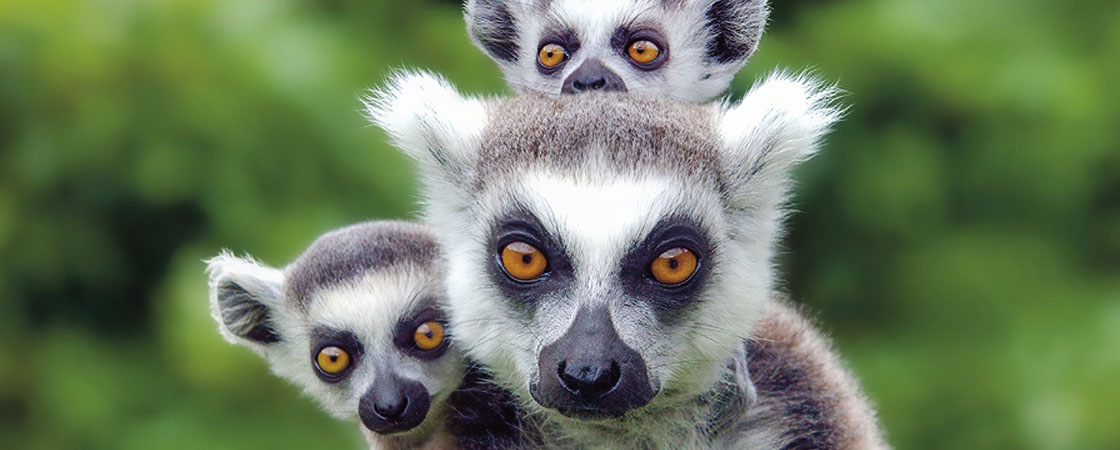

Ring-tailed lemur with two babies clinging to its back, all with distinctive orange eyes
Shutterstock.com (background); Mike Walker/Alamy Stock Photo (lemurs)

Do These Lemurs Belong in the Zoo?

Wild animals have been kept in zoos for thousands of years. But is that where they belong?

By Natalie Hughes
From the April 2026 Issue

Learning Objective: to read and analyze a text that presents arguments on both sides of a debate, then take a stand

Lexile: 1090L

Standards

On a warm summer day in 1874, crowds gathered in Philadelphia to take part in something extraordinary: the opening of one of the first public zoos. Thousands of Americans excitedly lined up for a chance to see creatures they could never even have dreamed of setting eyes on—towering bison, curious monkeys, and brightly colored birds.

The opening of the Philadelphia Zoo and others like it marked a turning point in how people connected with wild animals. Families could now see animals that they had previously only heard about or read about in books. 

More than 150 years later, zoos still enchant and delight the public. Each year, they draw millions of visitors. But despite their popularity, zoos have long been at the center of a heated debate: Is it ethical to keep wild animals in captivity?

Supporters of zoos say that they are critical for conservation and education. These proponents claim that zoos—with their vast spaces that are similar to natural habitats and frequently updated care guidelines—can keep animals safe and healthy. Critics, however, argue that keeping animals in captivity, even with good intentions, can cause harm. 

Who is right?

Shutterstock.com

How to Spot a Responsible Zoo


Trusted Accreditation: 

Look for certification from respected organizations, like the Association of Zoos & Aquariums. This shows that the zoo meets standards for care, conservation, and education. 

Animal Well-Being: 

Zoos should provide room for animals to move, natural features (like trees, streams, or rocks), and activities that keep animals physically and mentally engaged.

Learning Opportunities:

Zoos should have informational signs about animals’ conservation status and their life in the wild. They should also have staff on-site to answer visitors’ questions. 

Conservation and Curiosity

Shutterstock.com

Since 1991, 37 U.S. zoos have closed their elephant exhibits.

Proponents of zoos argue that they are essential in saving wild animals and their habitats. In 2024, accredited facilities—zoos and aquariums that meet specific standards for animal care and safety—spent $341 million on conservation efforts in the wild.

In fact, some species today might not exist without zoos. Take the California condor, for example. In 1982, only 22 of these majestic creatures existed in the wild. Thanks to the efforts of multiple zoos—which cared for and bred a number of these endangered birds—there are now more than 500, with more than half living in the wild.

Many zoos also rescue and rehabilitate endangered animals that have been injured, orphaned, or illegally captured and sold.

But many critics challenge the idea that zoos meaningfully drive conservation. They point out that while some zoo-based breeding programs have succeeded, studies suggest that efforts by zoos result in only a small number of species being successfully reintroduced back into the wild. 

Plus, many animals on display in zoos, such as pumas, baboons, and meerkats, are not endangered. Some people wonder if those animals really need the protection of zoos.

Still, some zoo professionals say that for many people, zoos are where caring about animals begins. Cassi Lyon, an anthrozoologist, explains that seeing animals in person can spark curiosity about nature. (An anthrozoologist is a scientist who studies the relationship between humans and animals.) That first experience, Lyon says, can get us to start asking important questions about animals, their habitats, and the challenges they face in the wild.

Dan Ashe, president and CEO of the Association of Zoos & Aquariums (AZA), agrees. “Most people will never have the luxury of seeing these animals in the wild,” he explains. “So zoos are creating an opportunity for connection and empathy.”

Surviving, Not Thriving

On the other hand, there is limited evidence that zoos lead to long-term changes in people’s behavior. While many visitors say they enjoy seeing the wildlife, some researchers have pointed out that a trip to the zoo does not always result in lasting action, such as donating to environmental causes, changing daily habits, or supporting habitat protection.

What’s more, research shows that captivity can be a source of chronic stress for some animals. Scientists have documented zoo animals exhibiting certain behaviors, including pacing, swaying, and repetitive movements, that are often linked to long-term stress and sometimes to poor care. Lori Marino, animal welfare expert and founder of the Kimmela Center for Animal Advocacy, says that an animal’s well-being is about whether it can live fully as a member of its species. And in zoos, she argues, many animals cannot do that. “They may survive,” Marino says, “but surviving is not thriving.”

Critics also question whether captivity—no matter how carefully managed—can truly meet the complex needs of wild animals. Take elephants, for example. In the wild, elephants travel long distances each day and live in large, multigenerational family groups. These conditions are extremely difficult to re-create in zoo settings. For this reason, a number of zoos have shut down their elephant exhibits. These zoos don’t believe it’s possible to keep the exhibits running in an ethical way.

Decide for Yourself

As the debate continues, many experts agree on one thing: Zoos are not all the same. So if you’re concerned about visiting one, try doing some research first. Experts on both sides of the debate say learning how a zoo cares for its animals, whether it is accredited, and how it supports wildlife beyond its gates can help visitors decide which places deserve their support. 

“We hope our guests are inquisitive, critical, and willing to speak up when something doesn’t seem right,” Ashe says.

What does your class think?

Do we still need zoos?

Please enter a valid number of votes for one class to proceed.

Do we still need zoos?

Please select an answer to vote.

Do we still need zoos?

0%
0votes
{{result.answer}}
Total Votes: 0
Thank you for voting!
Sorry, an error occurred and your vote could not be processed. Please try again later.

This article was originally published in the April 2026 issue.

video (1)
Audio ()
Activities (7)
Answer Key (1)
video (1)
Audio ()
Activities (7)
Answer Key (1)
Text-to-Speech