


Article
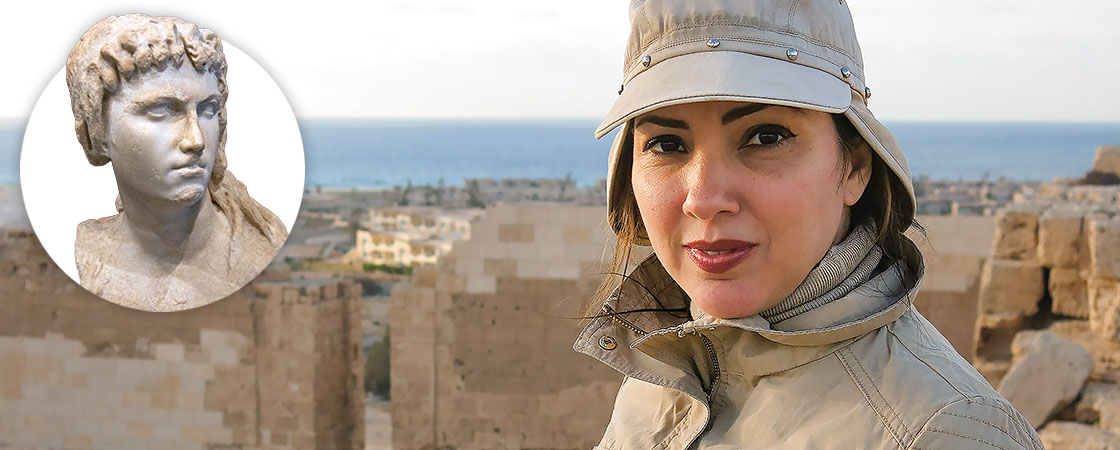
PAUL OLDING (Kathleen Martinez); Peter Horree/Alamy Stock Photo (sculpture)

The Search for Cleopatra’s Tomb

Archaeologist Kathleen Martínez is on a mission to find the long-lost grave of one of history’s most famous leaders.

By Jane Nussbaum
From the March 2026 Issue

Learning Objective: to synthesize key ideas from an article and an informational text

Lexiles: 980L, 790L

Standards

Story Navigation

Download and Print
AS YOU READ

Think about why Cleopatra has inspired such fascination.

The Search for Cleopatra’s Tomb

Archaeologist Kathleen Martínez is on a mission to find the long-lost grave of one of history’s most famous leaders.

Dust filled the desert air as archaeologist Kathleen Martínez peered into the darkness below. In front of her, a newly uncovered stone shaft led deep underground beneath the ruins of an ancient Egyptian temple called Taposiris Magna.

Martínez’s heart pounded. It was November 2022, and her team had just discovered this long-hidden entrance to what turned out to be a 4,300-foot-long tunnel. Carved by hand through solid rock some 2,000 years ago, it was an incredible display of human ingenuity. But to Martínez, the tunnel was something more. It was a clue that could help her finally solve one of history’s greatest mysteries: the location of the lost tomb of Cleopatra VII, the last ruler of ancient Egypt.

The tunnel seemed to stretch from beneath the temple all the way into the depths of the nearby Mediterranean Sea. But why? As Martínez studied it, she began to suspect something extraordinary: that much of the sacred site around her—and perhaps Cleopatra’s tomb itself—had long ago been swallowed up by the sea.

Dust filled the desert air as Kathleen Martínez peered into the darkness below. Martínez is an archaeologist. She was staring into a newly uncovered stone shaft. It went deep underground beneath the ruins of an ancient Egyptian temple, called Taposiris Magna.

Martínez’s heart pounded. It was November 2022. Her team had just discovered this long-hidden entrance to a 4,300-foot-long tunnel. It was carved about 2,000 years ago by hand through solid rock. It was an incredible display of human ingenuity. But to Martínez, the tunnel was something more. It was a clue that could help her finally solve one of history’s greatest mysteries: the location of the tomb of Cleopatra VII. She was the last ruler of ancient Egypt.

The tunnel seemed to stretch from the temple all the way into the depths of the nearby Mediterranean Sea. But why? Martínez studied it. She began to suspect that part of the temple had been swallowed up by the sea long ago. Maybe Cleopatra’s tomb had been swallowed up with it.


PAUL OLDING

Archaeologist Kathleen Martínez in Egypt

A Long-Held Curiosity

A Long-Held Curiosity

Kenneth Garrett

Taposiris Magna

Growing up in the Dominican Republic, Martínez was a brilliant student with a restless mind. From a young age, she dreamed of becoming an archaeologist and studying ancient Egypt’s great pharaohs, or rulers. But her parents discouraged the idea, telling her that archaeology wasn’t a practical career. So Martínez focused her razor-sharp mind on becoming a lawyer instead, graduating from law school at just 19. She soon built a thriving business as a criminal attorney. 

Yet the pull of history never left her, and Martínez often found herself reading about ancient Egypt. She decided to begin training in archaeology as a hobby, eventually earning a master’s degree. Her studies rekindled a long-held curiosity about one person in particular: Egypt’s last pharaoh, Cleopatra, one of the most powerful and exceptional women in history. 

“Cleopatra was a remarkable woman,” Martínez has said. “She accomplished so much in a time when women were so restricted.”

Martínez became fascinated with learning about Cleopatra’s life, her reign, and, especially, what happened to her body after she died. Applying her training as a criminal lawyer to the 2,000-year-old mystery of where the queen was buried, Martínez spent years sifting through the evidence, eventually developing an unusual theory. Finally, in her late 30s, Martínez made a daring decision: She would travel to Egypt to try to prove it. 

Martínez grew up in the Dominican Republic. She was a brilliant student. From a young age, she dreamed of becoming an archaeologist and studying ancient Egypt’s great pharaohs, or rulers. But her parents didn’t like the idea. They told her that archaeology wasn’t a practical career.

So Martínez focused on becoming a lawyer. She graduated from law school at just 19. She became a criminal attorney.

Yet Martínez often found herself reading about ancient Egypt. She decided to train in archaeology as a hobby. She eventually earned a master’s degree.

Her studies rekindled a long-held curiosity about one person in particular: Egypt’s last pharaoh, Cleopatra. She was one of the most powerful and exceptional women in history.

“Cleopatra was a remarkable woman,” Martínez has said. “She accomplished so much in a time when women were so restricted.”

Martínez became fascinated with learning about Cleopatra’s life, her reign, and, especially, what happened to her body after she died. She applied her training as a criminal lawyer to the 2,000-year-old mystery of where the queen was buried. She spent years sifting through the evidence. She eventually developed an unusual theory. Finally, in her late 30s, Martínez decided to go to Egypt to try to prove it.

The Temple of Isis

The Temple of Isis

For generations, historians have believed Cleopatra was buried near her royal palace in the city of Alexandria. But her tomb has never been found there. Martínez became convinced that it never would be—because, she believed, the queen had been laid to rest someplace else. 

Martínez theorized that Cleopatra would have chosen to be buried in a temple dedicated to Isis, the Egyptian goddess of motherhood and magic, with whom the queen closely identified. In fact, many of Cleopatra’s subjects considered her to be the living form of the goddess. Martínez visited 20 potential sites in Egypt, but none seemed like it could be where Cleopatra was buried. Some were too small. Others were dedicated to the wrong god or goddess. Finally, she traveled to a largely overlooked temple complex about 30 miles outside Alexandria, Taposiris Magna. Little was known about it—who built it and when. And there was no evidence it had ever been dedicated to Isis.

This didn’t deter Martínez. Instead, she took the lack of information as a sign: Taposiris Magna actually could be the site of Cleopatra’s tomb. Like the criminal lawyer she had trained to be, she just needed to investigate and find the proof. 

Historians have long believed that Cleopatra was buried near her royal palace in the city of Alexandria. But her tomb has never been found. Martínez, however, believed the queen had been buried someplace else.

Martínez thought Cleopatra would have chosen to be buried in a temple dedicated to Isis. That’s the Egyptian goddess of motherhood and magic. The queen closely identified with Isis. Many of Cleopatra’s subjects considered her to be the living form of the goddess. Martínez visited 20 potential sites in Egypt. But none seemed like it could be where Cleopatra was buried. Some were too small. Others were dedicated to the wrong god or goddess. Finally, she traveled to a largely overlooked temple complex, Taposiris Magna. It was about 30 miles outside Alexandria. No one knew who built it or when. And there was no evidence it had ever been dedicated to Isis.

This didn’t deter Martínez. She took the lack of information as a sign: Taposiris Magna actually could be the site of Cleopatra’s tomb. Like the criminal lawyer she had trained to be, she just needed to investigate and find the proof.

Jim McMahon/Mapman ®

Buried Evidence

Buried Evidence

So began Martínez’s dig at the temple, a project that has lasted 20 years and counting. In 2005, Martínez received official authorization to begin excavations of the ruins—a rare honor for a newcomer to archaeology. 

Her determination to unlock the temple’s secrets quickly paid off. The following year, Martínez’s team made an astonishing discovery: a set of fragile clay tablets inscribed with ancient Greek and hieroglyphics. The tablets revealed that Taposiris Magna had been constructed for Cleopatra’s great-great-great-grandfather—and that the temple was dedicated to Isis.

The discovery was the first real evidence that Martínez’s theory could be correct. If Cleopatra had wanted to be buried in a temple dedicated to Isis, then Taposiris Magna could be the one.

In the months and years to follow, Martínez’s team unearthed additional artifacts linking the site to Cleopatra: dozens of bronze coins bearing her image, pottery from her time period, mummies of high-ranking individuals who may have belonged to her royal circle. Then came the shocking discovery in November 2022: the massive underground tunnel stretching from the temple to the Mediterranean Sea. Studying the area, Martínez realized that much of the temple complex had likely sunk over time because of earthquakes and rising sea waters. And if, as she suspected, the tunnel led to Cleopatra’s tomb, the queen’s burial chamber might now be submerged beneath the waves. 

Martínez knew her team would need to search the seafloor next. But how?

So began Martínez’s dig at the temple. The project has lasted 20 years and counting.

In 2005, Martínez received official authorization to begin excavations of the ruins. That’s a rare honor for a newcomer to archaeology.

Her determination to unlock the temple’s secrets quickly paid off. The following year, Martínez’s team found a set of clay tablets inscribed with ancient Greek and hieroglyphics. It was an astonishing discovery. The tablets revealed that Taposiris Magna had been built for Cleopatra’s great-great-great-grandfather—and that the temple was dedicated to Isis.

The discovery was the first real evidence that Martínez’s theory could be correct.

In the years to follow, Martínez’s team unearthed additional artifacts linking the site to Cleopatra. They found dozens of bronze coins bearing her image, pottery from her time period, and mummies of individuals who may have belonged to her royal circle. Then came the shocking discovery in November 2022: the massive underground tunnel stretching from the temple to the Mediterranean Sea. Martínez studied the area. She realized that much of the temple complex had likely sunk over time because of earthquakes and rising sea waters. She suspected the tunnel led to Cleopatra’s tomb. If so, then the queen’s burial chamber might now be submerged beneath the waves.

Martínez knew her team would need to search the seafloor next. But how?

Kenneth Garrett

Martínez inside the tunnel beneath Taposiris Magna

Exploring the Deep

Exploring the Deep

Kenneth Garrett

Martínez and the dive crew on the shores of the Mediterranean Sea

On the advice of one of her team members, Martínez contacted one of the world’s most famous underwater explorers: oceanographer Robert Ballard, best known for discovering the wreck of the Titanic in 1985.

To her surprise, Ballard immediately agreed to join Martínez’s project, bringing his expertise in underwater research and mapping. With the help of the Egyptian navy, he and his crew began scanning the seabed off the coast near Taposiris Magna. Following the tunnel’s direction out into the ocean, they used sonar—technology that uses sound waves to create images underwater—to identify evidence of human-made objects on the seafloor. 

Next, divers were sent to examine the evidence up close. What they found suggests something incredible: that the area was not just a center of religion, but a key trading port as well. Beneath the waves, the team encountered towering columns, a marble floor, anchors, and pottery—all dating back to around the time of Cleopatra. Taken together, it’s clear evidence that large portions of the site were swallowed by the sea—just as Martínez theorized. 

These discoveries have only strengthened Martínez’s belief that Cleopatra’s tomb could be there too.

On the advice of one of her team members, Martínez contacted underwater explorer Robert Ballard. He is one of the world’s most famous oceanographers. He is best known for discovering the wreck of the Titanic in 1985.

Ballard immediately agreed to join Martínez’s project, bringing his expertise in underwater research and mapping. With the help of the Egyptian navy, he and his crew began scanning the seabed off the coast near Taposiris Magna. They followed the tunnel’s direction out into the ocean. They used sonar—technology that utilizes sound waves to create images underwater—to identify evidence of human-made objects on the seafloor.

Next, divers were sent to examine the evidence. Their findings suggest that the area was not just a center of religion, but also a trading port. Beneath the waves, the team encountered towering columns, a marble floor, anchors, and pottery. It all dated back to around the time of Cleopatra. Taken together, it’s clear evidence that large portions of the site were swallowed by the sea—just as Martínez had theorized.

These discoveries have only strengthened Martínez’s belief that Cleopatra’s tomb could be there too.

Kenneth Garrett

Martínez and crew members at the Taposiris Magna excavation site

Debate and Discovery

Debate and Discovery

Kenneth Garrett

This bust and bronze coin were found at the temple. Martínez believes the bust is of Cleopatra, but other experts disagree. 

Despite the significance of the team’s finds, many Egyptologists are unconvinced of Martínez’s theory. But she remains unfazed. After all, people are bound to resist when you challenge accepted ideas.

Even if Cleopatra’s tomb is never found at Taposiris Magna, Martínez’s work there has already made a lasting impact. Her excavation has confirmed the temple’s connection to Isis, uncovered artifacts dating to Egypt’s last pharaohs, and revealed how parts of the ancient landscape were lost to the sea. Her work has rewritten what experts know about Egypt’s last dynasty and opened up new possibilities for future archaeologists to study.

As Martínez continues her search, her mission has become about more than finding a queen’s long-lost grave. It’s also an inspiring example of the power of curiosity, courage, and perseverance—qualities that drive history’s great leaders and great explorers alike.

Somewhere, whether under earth or sea, Cleopatra’s tomb still waits. And Martínez, the lawyer-turned-archaeologist who refused to give up, is still looking for clues that will lead her to it. 

Even so, many Egyptologists are unconvinced of Martínez’s theory. But she remains unfazed. After all, people are bound to resist when you challenge accepted ideas.

Cleopatra’s tomb may never be found at Taposiris Magna. But Martínez’s work has already made a lasting impact. Her excavation has confirmed the temple’s connection to Isis. It has uncovered artifacts dating to Egypt’s last pharaohs. And it has revealed how parts of the ancient landscape were lost to the sea. Her work has rewritten what experts know about Egypt’s last dynasty. And it has opened up new possibilities for future archaeologists to study.

Martínez continues her search. But her mission has become about more than finding a queen’s long-lost grave. It’s also an inspiring example of the power of curiosity, courage, and perseverance—qualities that drive history’s great leaders and great explorers alike.

Somewhere, whether under earth or sea, Cleopatra’s tomb still waits. And Martínez, the lawyer-turned-archaeologist who refused to give up, is still looking for clues that will lead her to it.

DMP/Getty Images (crowd); Shutterstock.com (hand, steps, flower, background)

Was Cleopatra the First Celebrity? 

How an ancient Egyptian queen mastered the art of fame.

Like all true celebrities, Cleopatra knew how to make an entrance.

On a summer day in 41 B.C., a magnificent ship sailed up a river in ancient Turkey. Above its gilded prow, massive purple sails puffed grandly in the wind. Silvery oars dipped in and out of the water as the sweet scent of incense wafted from the deck. 

And at the center of it all, lounging beneath a golden canopy, was Cleopatra VII, queen of Egypt. She was dressed as the Roman goddess Venus. 

When Roman general Mark Antony—one of the most powerful men in the world—arrived to greet her, he was dazzled. 

It was exactly what Cleopatra had hoped for.

Like all true celebrities, Cleopatra knew how to make an entrance.

It was a summer day in 41 b.c. A magnificent ship sailed up a river in ancient Turkey. Massive purple sails puffed grandly in the wind. Silvery oars dipped in and out of the water. The sweet scent of incense wafted from the deck.

And at the center of it all was Cleopatra VII, queen of Egypt. She was lounging beneath a golden canopy, dressed as the Roman goddess Venus.

When Roman general Mark Antony—one of the most powerful men in the world—arrived to greet her, he was dazzled.

It was exactly what Cleopatra had hoped for.

Silver Screen Collection/Archive Photos/Getty Images (Elizabeth Taylor); Scholastic (Cleopatra in space); Wordsworth Editions Ltd, 1993 (Antony and Cleopatra); iStockPhoto/Getty Images (all other images)

Many historians consider Cleopatra to be the world’s first celebrity, and her fame has endured for centuries. Her life has inspired countless works, from a Shakespeare play to an Oscar-winning film to famous paintings and beloved graphic novels.

On the left, Cleopatra from the Cleopatra in Space novel series. Bottom right : Elizabeth Taylor in the movie Cleopatra

A Born Ruler

A Born Ruler

Historians agree with Mark Antony: Cleopatra was dazzling. She was brilliant, charismatic, and fiercely determined. Born in 69 B.C., she would grow up to be the famous last leader in a line of Macedonian Greek pharaohs who had ruled Egypt for centuries. But she didn’t become a star overnight. 

As the child of royalty, Cleopatra received the best education possible. She studied economics and politics and could speak nine languages—including Egyptian, a language her Greek-speaking family had ignored for generations. 

It was a smart move. Speaking Egyptian helped her connect with her future subjects in a way no ruler of her dynasty ever had before. That would help her survive—and shine—when, at just 18, she became queen. 

As pharaoh, Cleopatra oversaw a complex farming system. When harvests were poor, she would open the kingdom’s stash of grain to hungry villagers.

The queen also wisely embraced Egypt’s ancient traditions. She frequently appeared at festivals dressed as Isis, a beloved goddess. Her subjects worshipped her for it like a pop star. 

Indeed, Cleopatra understood that ruling wasn’t just about power and might.

It was about image. 

Historians agree with Mark Antony: Cleopatra was dazzling. She was brilliant, charismatic, and fiercely determined. She was born in 69 b.c. She grew up to be the famous last leader in a line of Macedonian Greek pharaohs. They had ruled Egypt for centuries. But she didn’t become a star overnight.

As the child of royalty, Cleopatra received the best education possible. She studied economics and politics. She could speak nine languages—including Egyptian, a language her Greek-speaking family had ignored for generations.

It was a smart move. Speaking Egyptian helped her connect with her future subjects. That would help her survive—and shine—when, at just 18, she became queen.

As pharaoh, Cleopatra oversaw a complex farming system. When harvests were poor, she would open the kingdom’s stash of grain to hungry villagers.

The queen also wisely embraced Egypt’s ancient traditions. She appeared at festivals dressed as Isis, a beloved goddess. Her subjects worshipped her for it like a pop star.

Cleopatra understood that ruling wasn’t just about power and might.

It was about image.

A Doomed Pair

A Doomed Pair

Like her father who ruled before her, Cleopatra relied on support from the Roman Republic to keep Egypt stable. So when Roman leader Mark Antony demanded Cleopatra report to him, she did. 

But she didn’t just show up.

She put on a show.

Her spectacular river entrance as the goddess Venus was intended to send a message: Egypt, like Cleopatra, was wealthy, powerful, and worth protecting. Antony was captivated. 

Soon, Antony moved to Egypt to be with Cleopatra, and for more than a decade, they ruled as a team. They had children together. They waged war together. And together, they caused a stir in Rome. 

People there were outraged. In Roman culture, women were expected to be quiet and obedient—not powerful leaders. And nothing draws attention (or criticism) like a woman breaking the rules. 

One of the couple’s fiercest critics was Antony’s rival, a Roman leader named Octavian. Octavian spread rumors that Antony and Cleopatra planned to rule Rome together. Soon, with the support of his people, Octavian declared war. 

In 31 B.C., Antony and Cleopatra’s naval forces were crushed. Knowing Octavian would soon come for him, Antony took his own life. Grief-stricken, Cleopatra locked herself in the tomb that held his body. She realized that if Octavian captured her, she would be tortured, her body paraded through the streets of Rome. Instead, she died on her own terms—likely by taking poison.

Like her father before her, Cleopatra relied on support from the Roman Republic to keep Egypt stable. So when Roman leader Mark Antony demanded Cleopatra report to him, she did.

But she didn’t just show up.

She put on a show.

Her spectacular river entrance was intended to send a message: Egypt, like Cleopatra, was wealthy, powerful, and worth protecting. Antony was captivated.

Soon Antony moved to Egypt to be with Cleopatra. For more than a decade, they ruled as a team. They had children together. They waged war together. And together, they caused a stir in Rome.

People there were outraged. In Roman culture, women were expected to be quiet and obedient—not powerful leaders. And nothing draws attention (or criticism) like a woman breaking the rules.

One of the couple’s fiercest critics was Octavian. He was a Roman leader. Octavian spread rumors that Antony and Cleopatra planned to rule Rome together. Soon, with the support of his people, Octavian declared war.

In 31 b.c., Antony and Cleopatra’s naval forces were crushed. Knowing Octavian would soon come for him, Antony took his own life. Cleopatra was grief-stricken. She locked herself in the tomb that held his body. She realized that if Octavian captured her, she would be tortured, her body paraded through the streets of Rome. Instead, she died on her own terms—likely by taking poison.

A Legend Is Born

A Legend Is Born

fter Cleopatra’s death, Octavian claimed Egypt for Rome. But the queen he tried to erase became far more famous than he ever expected.

Even in her own time, Cleopatra inspired awe and anger, fascination and fear. In the centuries since, Cleopatra’s status as a legend has only grown. People around the world are still captivated by her story, still dazzled by her image, still searching for her tomb. 

If that’s not celebrity, what is?

After Cleopatra’s death, Octavian claimed Egypt for Rome. But the queen he tried to erase became far more famous than he ever expected.

Even in her own time, Cleopatra inspired awe and anger, fascination and fear. In the centuries since, Cleopatra’s status as a legend has only grown. People around the world are still captivated by her story, still dazzled by her image, still searching for her tomb.

If that’s not celebrity, what is?

Icon of a lightbulb

Writing Prompt

Write a letter from Martínez to Cleopatra describing Martínez’s search. Ask any lingering questions. Then write a response from Cleopatra. Use details from both articles while imagining each writer’s voice.


Writing Prompt

Write a letter from Martínez to Cleopatra describing Martínez’s search. Ask any lingering questions. Then write a response from Cleopatra. Use details from both articles while imagining each writer’s voice. 

This article was originally published in the March 2026 issue.

This article was originally published in the March 2026 issue.

Audio ()
Activities (4)
Quizzes (1)
Answer Key (1)
Audio ()
Activities (4)
Quizzes (1)
Answer Key (1)
Text-to-Speech