
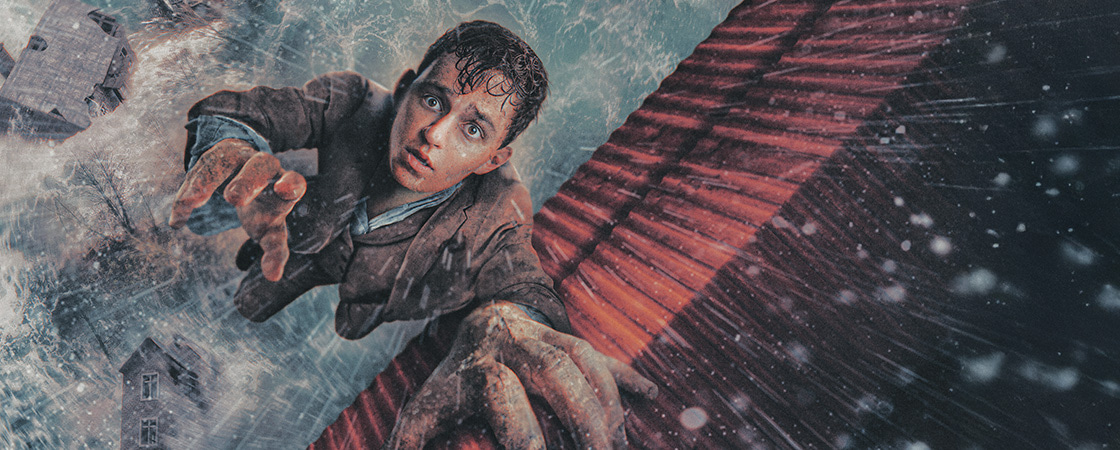

A boy clings to a red tiled roof & reaches out one muddy hand as a storm tears houses apart below
Art by Randy Pollak

Wall of Water

How 16-year-old Victor Heiser survived the Great Johnstown Flood of 1889

By Anna Starecheski

Learning Objective: Students will analyze the key causes of a disaster and use evidence from the text to explain whether the disaster could have been prevented.

Lexiles: 1030L, 760L

Standards

Download and Print

Sixteen-year-old Victor Heiser trudged through 2 feet of muddy brown water toward his family’s stable, where a pair of nervous horses were tied. It had been raining hard for the past day, and water was rising in the streets of Johnstown, Pennsylvania. Victor’s dad was worried about the horses getting trapped if the water kept rising, so he asked Victor to untie them. 

Victor had just gotten the horses loose when he heard a strange noise: a deafening roar, punctuated by booming crashes.

He looked up, confused, and saw his parents in the second-story window of their house. His father was gesturing frantically for Victor to climb onto the roof of the stable, so Victor did just that. 

What he saw when he got there was incomprehensible: A wall of water roared toward him, but “it was not recognizable as water,” Victor later wrote. “It was a dark mass” that carried houses, train cars, trees, and animals with it.

Within seconds, the flood crushed Victor’s house before his eyes, sweeping his parents away with it. 

Victor glanced at his watch. It was 4:20 p.m.

He wondered how long it would take before he was killed.

Victor Heiser was 16. He trudged through 2 feet of muddy water toward his family’s stable, where two horses were tied up. It had been raining for the past day, and water was rising in the streets of Johnstown, Pennsylvania. Victor’s dad was worried about the horses getting trapped, so he asked Victor to untie them.

Victor got the horses loose. Then he heard a deafening roar, punctuated by booming crashes. He looked up and saw his parents in the second-story window of their house. His father was gesturing frantically for Victor to climb onto the roof of the stable. So Victor did.

What he saw from the roof was incomprehensible: A wall of water roared toward him, but “it was not recognizable as water,” Victor later wrote. “It was a dark mass” that carried houses, train cars, trees, and animals with it.

Within seconds, the flood crushed Victor’s house. He saw his parents swept away with it.

Victor looked at his watch. It was 4:20 p.m. He wondered: How long would it take before he was killed?


Johnstown Area Heritage Association

Johnstown: Before the Flood

Johnstown, Pennsylvania, evolved from a small, remote settlement into a booming industrial town in the 1800s. Its growth was fueled by rich local deposits of coal and iron, as well as the arrival of the massive Cambria Iron Company, which created thousands of jobs.

Johnstown Area Heritage Association

Workers at the Cambria Iron Company

A Growing Town

A Growing Town

Victor’s father, George, had grown up in Johnstown in the 1830s and 1840s. At the time, Johnstown was a quiet rural village sitting at the point where the Little Conemaugh and Stonycreek rivers joined to become the Conemaugh River. About 3,000 people lived there.

Then, in the early 1850s, the Pennsylvania Railroad arrived in Johnstown, connecting the town to the larger nearby city of Pittsburgh. Around that same time, the Cambria Iron Company—a factory that made iron and steel—opened, eventually transforming Johnstown into a thriving industrial powerhouse. 

Immigrants from Europe flocked to the area to work in factories and mines. By 1889, Johnstown’s population had increased to about 10,000 people. The bustling industrial center became the heart of the Conemaugh Valley, with other towns cropping up nearby. George Heiser owned a general store in the middle of Johnstown, and business was steady.

But as Johnstown’s industry and population boomed, a dangerous threat grew just 14 miles up the river: the South Fork Dam. It had been completed in 1852, built across the South Fork Creek and made up of layers of earth and stone. The dam held back water from several streams and creeks to create a 2-mile-long lake called the Western Reservoir—a human-made lake built to store water. That stored water fed into canals, which were human-made waterways used to transport goods on boats. But once the railroad replaced boats, the dam was left to slowly deteriorate. 

In 1879, a group of wealthy Pittsburgh businessmen bought the lake, the dam, and the surrounding land and turned it into the South Fork Fishing and Hunting Club (SFFHC), a private and exclusive mountain retreat for Pennsylvania’s richest men and their families. In addition to the lavish 47-room clubhouse, 16 tidy cottages lined the reservoir, which they renamed Lake Conemaugh. The water was clear and full of fish, and in the summer, sailboats drifted across the glittering surface.

To create their perfect vacation spot, the owners of the SFFHC made changes to the dam. They lowered it by 3 feet to make the top wide enough for two carriages. They also added a screen to the spillway—a path that let excess water flow out safely if the lake got too full—to keep fish inside the lake.

These changes would turn out to be deadly mistakes.

Victor’s father, George, had grown up in Johnstown in the 1830s and 1840s. At the time, it was a quiet rural village. It sat at the point where the Little Conemaugh and Stonycreek rivers joined to become the Conemaugh River. About 3,000 people lived there.

In the early 1850s, the Pennsylvania Railroad arrived in Johnstown. It connected the town to Pittsburgh, a a larger city nearby. Then the Cambria Iron Company opened. It was a factory that made iron and steel. It changed Johnstown into an industrial powerhouse.

Immigrants from Europe went there to work in factories and mines. By 1889, Johnstown’s population had increased to about 10,000 people. The town became the heart of the Conemaugh Valley. Other towns popped up nearby. George Heiser owned a general store in the middle of Johnstown. Business was steady.

Johnstown’s industry and population boomed. But a dangerous threat grew just 14 miles up the river: the South Fork Dam. It had been completed in 1852, and was built across the South Fork Creek. It was made up of layers of earth and stone. The dam held back water from several streams and creeks. This created a 2-mile-long lake called the Western Reservoir—a human-made lake built to store water. The stored water fed into canals. They were human-made waterways. Boats transported goods on them. But the railroad replaced the boats. The dam was left to slowly deteriorate.

In 1879, a group of wealthy Pittsburgh businessmen bought the lake, the dam, and the surrounding land. They turned it into the South Fork Fishing and Hunting Club (SFFHC). It was a private and exclusive mountain retreat for Pennsylvania’s richest men and their families. It had a 47-room clubhouse and 16 cottages. The buildings lined the reservoir, which they renamed Lake Conemaugh. The water was clear and full of fish. In the summer, sailboats drifted across the glittering surface.

To create their perfect vacation spot, the owners of the SFFHC changed the dam. They lowered it by 3 feet so the top could be made wide enough for two carriages. They added a screen to the spillway to keep fish inside the lake. (The spillway let excess water flow out if the lake got too full.)

These changes would turn out to be deadly mistakes.

Jim McMahon/Mapman ®

Conemaugh Valley, 1889

Johnstown lies where the Little Conemaugh River and the Stonycreek River join to form the Conemaugh River. The South Fork Dam was located upstream and to the east. When the dam broke, the floodwater traveled 14 miles to reach Johnstown, devastating other towns along the way.

Rising Waters

Rising Waters

Most people in Johnstown, including Victor’s family, weren’t wealthy enough to join the SFFHC to enjoy Lake Conemaugh. But the dam itself was a frequent source of stress for all who lived in the area. It had failed several times since its construction, including once in 1862 when it poured 2 feet of water into the streets of Johnstown. Every time it rained, rumors about the dam bursting would spread through the Conemaugh Valley. 

Throughout the 1880s, though, the SFFHC insisted that the dam was safe—and assured residents that even if it did break, Johnstown wouldn’t be in danger.

Then, in the last few days of May 1889, an estimated 6 to 10 inches of rain fell in the area. By the time the sun came up on May 31, the rivers were about to overflow. In Johnstown, people went about their business as best they could. Some families left town, but many stayed put—the rivers had flooded before, and Johnstown had made it through mostly unscathed. All morning, people came into George Heiser’s store for supplies and anxious conversation. They wondered: Would this be the day the old dam finally broke?

Up at SFFHC, Lake Conemaugh was rising about an inch every 10 minutes. Dozens of workers tried everything they could think of to prevent disaster. They piled more dirt on top of the dam. They tried to dislodge the debris that had clogged the spillway. 

They even tried to dig a new spillway. 

But by 1:30 p.m., it was clear that there was nothing they could do. The water was beginning to pour over the top of the dam. 

An anxious and curious crowd soon gathered, waiting for the inevitable disaster. Then, minutes after 3 p.m., a few dozen people watched as the dam burst, unleashing almost 4 billion gallons of water into the Conemaugh Valley.  

As the flood continued downstream, wiping out several towns, it picked up buildings, animals, trees, and other pieces of debris. One witness described it as “a huge hill rolling over and over.” Houses, roads, and even the earth they were built on were scraped away, leaving only bedrock behind. 

When the water hit the Cambria Iron Company, it picked up a train, snarls of barbed wire, and more. By the time it reached Johnstown, nearly an hour after the dam had burst, the roiling mass of water and debris was 40 feet tall and rushing forward at 40 miles per hour. 

That’s what Victor Heiser saw roaring toward him as he stood on the roof of the stable.

Most people in Johnstown, including Victor’s family, weren’t wealthy enough to join the SFFHC. But the dam was a source of stress for all who lived in the area. It had failed several times. In 1862 it had even poured 2 feet of water into the streets of Johnstown. Every time it rained, rumors about the dam bursting spread through the Conemaugh Valley.

But throughout the 1880s, the SFFHC said that the dam was safe. They said that even if it did break, Johnstown wouldn’t be in danger.

Then, in the last few days of May 1889, an estimated 6 to 10 inches of rain fell in the area. By the morning of May 31, the rivers were about to overflow. In Johnstown, people went about their business as best they could. Some families left town. But many stayed. The rivers had flooded before, and Johnstown had made it through mostly unscathed. All morning, people came into George Heiser’s store for supplies and anxious conversation. They wondered: Would this be the day the old dam finally broke?

Up at SFFHC, Lake Conemaugh was rising about an inch every 10 minutes. Dozens of workers tried to prevent disaster. They put more dirt on top of the dam. They tried to clean out the clogged spillway.

They even tried to dig a new spillway.

But by 1:30 p.m., it was clear that there was nothing they could do. The water began pouring over the top of the dam.

A concerned and curious crowd soon gathered, waiting for disaster. Then, minutes after 3 p.m., a few dozen people watched as the dam burst. Almost 4 billion gallons of water poured into the Conemaugh Valley.

The flood continued downstream. It wiped out several towns. It picked up buildings, animals, trees, and other pieces of debris. One witness described it as “a huge hill rolling over and over.” Houses, roads, and even the earth they were built on were scraped away.

When the water hit the Cambria Iron Company, it picked up a train, snarls of barbed wire, and more. It reached Johnstown nearly an hour after the dam had burst. The mass of water and debris was 40 feet tall. It was rushing forward at 40 miles per hour.

That’s what Victor Heiser saw heading toward him from the roof of the stable.

Johnstown Area Heritage Association

An Exclusive Resort

In the late 1800s, the lake created by the South Fork Dam was turned into a summer retreat for the nation’s wealthy elite, including prominent steel tycoons Henry Clay Frick and Andrew Carnegie. 

Riding Out the Flood

Riding Out the Flood

Moments after his childhood home vanished, the stable Victor stood on was ripped from its foundation and swept away. Victor managed to stay above water as it rolled over and over, watching helplessly as he saw his neighbors in similar danger all around him. 

One family was frantically trying to pack their belongings into a trunk when the flood overtook them. Another woman rode an open tar barrel, trying to keep her head above water as the sticky black goo covered her. “There was nothing I could do for anybody,” Victor later remembered.

Finally, the flood seemed to slow, and Victor spotted a two-and-a-half-story building that was still standing. He managed to jump onto the roof, joining a small group of people stranded there. Realizing that maybe he wasn’t about to die after all, Victor took out his watch again. It was not yet 4:30 p.m. Ten minutes was all it had taken to destroy his town and kill hundreds of his neighbors. 

The rain kept falling, and Victor and his fellow survivors were able to pull a few others onto the roof as they floated by. By the time night fell, 19 people were taking refuge there. They climbed through a skylight into the attic of the building to escape the cold, pounding rain. The group of soaked and exhausted survivors spent a long, sleepless night listening to the whooshing sound of buildings collapsing one by one into the water. All they could do was hope that their shelter wouldn’t meet the same fate.

Moments after his childhood home vanished, the stable Victor stood on was ripped from its foundation and swept away. Victor managed to stay above water. He saw his neighbors in similar danger all around him.

One family was frantically trying to pack their belongings into a trunk when the flood overtook them. Another woman rode an open tar barrel, fighting to keep her head above water as the sticky black goo covered her. “There was nothing I could do for anybody,” Victor later remembered.

Finally, the flood seemed to slow. Victor spotted a two-and-a-half story building that was still standing. He managed to jump onto the roof. He joined a small group of people stranded there. Victor took out his watch again. It was not yet 4:30 p.m. Ten minutes was all it had taken to destroy his town and kill hundreds of his neighbors.

The rain kept falling. Victor and his fellow survivors pulled a few others onto the roof as they floated by. That night, 19 people took refuge there. They climbed through a skylight into the attic of the building to escape the rain. They spent a long, sleepless night listening to the sounds of buildings collapsing into the water. All they could do was hope that their shelter wouldn’t meet the same fate.

Fire and Water

Fire and Water

When the sun finally rose, Victor and his fellow survivors were relieved to find that the rain had stopped. The water had receded enough so that it only reached the first story of the building. Between them and the safety of the surrounding hills half a mile away was a huge field of debris. Victor was able to walk on the debris until, finally, he was on solid ground again.

The exhausted teenager trudged downstream, joining the other survivors searching for their loved ones. Victor hoped to find his parents but was distracted from his goal when he came upon the Stone Bridge, a railroad crossing located just past the point where the Conemaugh River started. The flood had crashed up against the Stone Bridge and formed a kind of dam made up of crushed houses, train cars, and barbed wire in which dozens of people were trapped. 

And then, horribly, the entire mess caught fire.

Victor joined the people trying desperately to save those who were trapped in the fiery wreckage. They did manage to rescue some—but not all. The fire burned for three days.

The sun finally rose. Victor and his fellow survivors were relieved that the rain had stopped. The water had receded. It only reached the first story of the building. There was a huge field of debris between them and the safety of the hills a half a mile away. Victor walked across the debris. Finally, he was on solid ground again.

The exhausted teenager went downstream. He joined the other survivors searching for their loved ones. Victor hoped to find his parents. But then he came upon the Stone Bridge, a railroad crossing located just past the point where the Conemaugh River started. The flood had crashed up against the Stone Bridge and formed a kind of dam made up of crushed houses, train cars, and barbed wire. Dozens of people were trapped in it.

And then, horribly, the entire mess caught fire.

Victor joined the people trying to save those who were trapped. They managed to rescue some—but not all. The fire burned for three days.

Johnstown Area Heritage Association

Johnstown: After the Flood

By the time the floodwater reached Johnstown, it carried heaps of debris with it—houses, trains, bridges, and more. More than 2,000 people lost their lives. 

Charity and Blame

Charity and Blame

Heritage Art/Heritage Images via Getty Images (Victor Heiser); W. W. Norton & Company (An American Doctor’s Odyssey)

Victor Heiser became a doctor who devoted his life to stopping the spread of diseases worldwide.

Once the water receded and the fire was put out, the debris field was larger than 22 football fields and as tall as a seven-story building in places. The disaster was the largest single-day loss of civilian (nonmilitary) life in U.S. history at the time: 2,209 people were killed, including 99 entire families. 

The harrowing story of the flood spread across the country like wildfire. Journalists and photographers rushed to Johnstown, and newspapers reported on the disaster for weeks. Donations came in from across the country and even around the world. Fundraisers were held in churches, concert halls, and opera houses. Wealthy people gave thousands of dollars, while children sent in their nickels and dimes. In all, the contributions from the United States totaled more than $3.6 million, with another $141,000 sent from overseas. (That’s more than $150 million in today’s money.)

There was more than just money pouring into Johnstown though: Walla Walla, Washington, sent potatoes; Minneapolis, Minnesota, sent flour; Cincinnati, Ohio, sent 20,000 pounds of ham. Prisoners at the Western Penitentiary in Pittsburgh baked 1,000 loaves of bread, and a butcher in New York sent 150 pounds of bologna. Donations of clothes, furniture, lumber, soap, and matches were also sent to the devastated town. 

But in the midst of all this charity, resentment and anger started to brew in Johnstown. When it came to placing blame, there was really only one possibility that made sense: the men of the SFFHC. 

The idea of the SFFHC members sitting comfortably in their lakeside cottages as thousands died in the valley below was enough to stir many people in Johnstown and across the country into righteous fury. Engineers came to examine the ruined dam and found that the changes the club had made to it—and the lack of maintenance it had received—caused it to collapse.

News spread quickly. Headlines like “The Pittsburgh Fishing Club Chiefly Responsible” and “THE CLUB IS GUILTY” ran in papers across the country. It wasn’t long before people who had lost family members in the flood began suing the club and its members. 

However, the people being sued were some of the wealthiest and most powerful men in the world. And even if they hadn’t been, it would still be difficult to prove that the flood was their fault. They could argue that they didn’t know the dam was dangerous, that the weather was unprecedented, that even if they hadn’t made changes to the dam, it still could have failed.

In the end, nobody who sued the SFFHC got a cent. All the people of Johnstown could do was rebuild and try to move on. And rebuild they did—most flood survivors stayed in the valley, and by 1910, Johnstown’s population had more than doubled from 1889.

Once the water receded and the fire was put out, the debris field was larger than 22 football fields. It was as tall as a seven-story building in places. The disaster was the largest single-day loss of civilian (nonmilitary) life in U.S. history at the time: 2,209 people were killed, including 99 entire families.

The story of the flood spread across the country like wildfire. Journalists and photographers rushed to Johnstown. Newspapers reported on the disaster for weeks. Donations came in from across the country and even around the world. Fundraisers were held in churches, concert halls, and opera houses. Wealthy people gave thousands of dollars. Children sent in nickels and dimes. The contributions from the United States totaled more than $3.6 million. Another $141,000 came from overseas. (That’s more than $150 million in today’s money.)

People sent other things too. Walla Walla, Washington, sent potatoes. Minneapolis, Minnesota, sent flour. Cincinnati, Ohio, sent 20,000 pounds of ham. Prisoners at the Western Penitentiary in Pittsburgh baked 1,000 loaves of bread. A butcher in New York sent 150 pounds of bologna. Clothes, furniture, lumber, soap, and matches were also sent to the devastated town.

Even so, resentment and anger started to brew in Johnstown. For placing blame, only one possibility made sense: the men of the SFFHC.

The idea of the SFFHC members sitting comfortably in their lakeside cottages as thousands died in the valley below made many people in Johnstown and across the country furious. Engineers came to examine the ruined dam. They found that the changes the club had made to it—and its lack of maintenance—caused it to collapse.

News spread quickly. Headlines like “The Pittsburgh Fishing Club Chiefly Responsible” and “THE CLUB IS GUILTY” ran in papers across the country. Soon, people who had lost family members in the flood began suing the club and its members.

However, the people being sued were some of the wealthiest and most powerful men in the world. Even if they hadn’t been, it would still be difficult to prove that the flood was their fault. They could argue that they didn’t know the dam was dangerous. They could say the weather was unprecedented. They could say that the dam would have failed even without the changes.

In the end, nobody who sued the SFFHC got a cent. All the people of Johnstown could do was rebuild. Most flood survivors stayed in the valley. By 1910, Johnstown’s population had more than doubled from 1889.

A Remarkable Life

A Remarkable Life

John Rucosky/The Tribune-Democrat via AP Images

Each year on May 31, luminaries light up Johnstown to honor the flood’s victims.

For two weeks after the flood, Victor Heiser searched for his parents, hoping that they had survived as miraculously as he did. Sadly, that wasn’t the case, and at 16, Victor was totally alone in the world. 

He later said that if it wasn’t for the flood, he likely would have stayed in Johnstown for the rest of his life. Instead, he struck out on his own. He stayed with a friend’s family for a while before going to school to become an engineer. After a year of studying, he decided to go to medical school instead. 

When he became a doctor, Victor was frustrated to learn how many people worldwide died because of preventable and treatable diseases. He made it his mission to fight diseases in developing countries and is credited with saving as many as 2 million lives through his work in places like the Philippines, Japan, and Ethiopia. When he retired, he said, “Mine has been an extraordinarily happy and satisfactory life.” 

And so a young boy who lost everything in the flood—who couldn’t save his parents or his neighbors—dedicated himself to saving the lives of strangers around the world.

For two weeks after the flood, Victor searched for his parents. Sadly, they hadn’t survived. At 16, Victor was alone in the world.

He later said that if there had been no flood, he likely would have stayed in Johnstown for the rest of his life. Instead, he struck out on his own. He stayed with a friend’s family for a while. Then he went to school to become an engineer. After a year of studying, he decided to go to medical school instead.

He became a doctor. He learned that many people worldwide died because of preventable and treatable diseases. This frustrated him. So he decided to fight diseases in developing countries. He is credited with saving as many as 2 million lives through his work in places like the Philippines, Japan, and Ethiopia. When he retired, he said, “Mine has been an extraordinarily happy and satisfactory life.”

And so a young boy who lost everything in the flood—who couldn’t save his parents or his neighbors—dedicated himself to saving the lives of strangers around the world.

Icon of a lightbulb

Writing Prompt

Analyze the key causes of the Johnstown Flood as described in the article. Then explain whether the disaster could have been prevented. Use text evidence. 

Writing Prompt

Analyze the key causes of the Johnstown Flood as described in the article. Then explain whether the disaster could have been prevented. Use text evidence. 

This article was originally published in the December 2026/January 2027 issue.

This article was originally published in the December 2026/January 2027 issue.

video (1)
Slideshows (1)
Audio ()
Activities (3)
Quizzes (1)
Answer Key (1)
video (1)
Slideshows (1)
Audio ()
Activities (3)
Quizzes (1)
Answer Key (1)
Text-to-Speech