
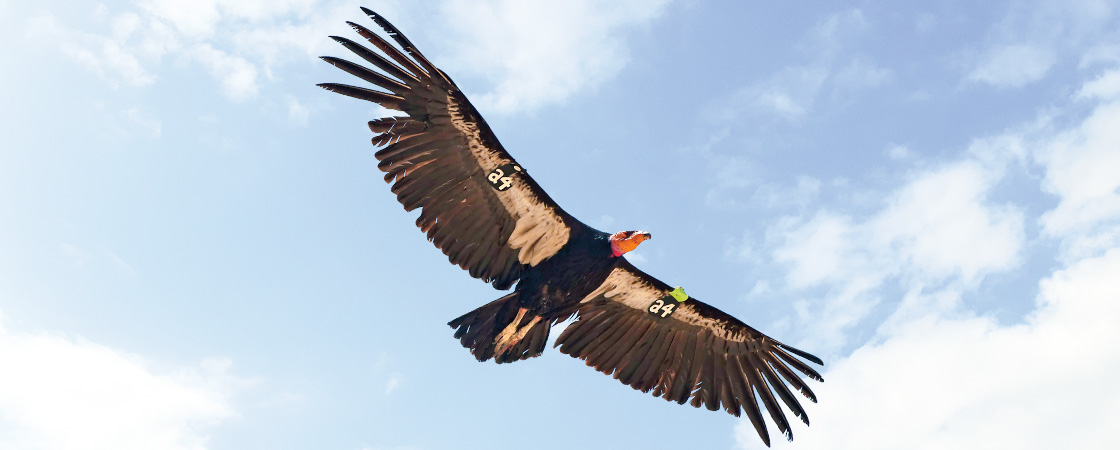

Imagine standing on a cliff in Northern California as wind sweeps in from the Pacific Ocean. Suddenly, a giant silhouette appears above you: a California condor. It glides by on magnificent black wings that stretch nearly 10 feet from tip to tip.
Below, the Klamath River winds through a land where the Yurok, an Indigenous people, have lived for thousands of years. For the Yurok, the condor—which they call prey-go-neesh—is not just a bird. It’s a part of the family. The Yurok believe prey-go-neesh carry their prayers to the heavens and help keep the world in balance.
It’s likely that thousands of California condors soared through western skies during the Ice Age. But over time, the species was pushed toward extinction by threats like habitat loss and lead poisoning. By the 1980s, only 22 condors were left in the wild.
Today, though, the condor is making a comeback that once seemed impossible. One of the most meaningful chapters in its survival story is unfolding in the redwood region, where the Yurok Tribe has worked for decades to bring prey-go-neesh home.
The tribe’s effort is not simply about saving a species, says Tiana Williams-Claussen, who leads the Yurok Tribe’s wildlife program. “It’s like bringing a piece of our family back,” she says. “We’re healing ourselves as well as the world.”
Imagine you’re standing on a cliff in Northern California. silhouette appears above you. It’s a California condor. It glides by on magnificent black wings. They stretch nearly 10 feet from tip to tip.
The Klamath River flows through the land below you. The Yurok, an Indigenous people, have lived there for thousands of years. The Yurok call the condor a different name: prey-go-neesh. For them, it’s not just a bird. It’s a part of the family. The Yurok believe prey-go-neesh carry their prayers to the heavens and help keep the world in balance.
During the Ice Age, there were likely thousands of California condors. But over time, the species almost became extinct. Habitat loss, lead poisoning, and other threats were the causes. By the 1980s, only 22 condors were left in the wild.
Today, the condor is making a comeback that once seemed impossible. An important chapter in its survival story is happening in the redwood region. There, the Yurok Tribe has worked for decades to bring prey-go-neesh home.
The tribe’s effort is not simply about saving a species, says Tiana Williams-Claussen. She leads the Yurok Tribe’s wildlife program. “It’s like bringing a piece of our family back,” she says. “We’re healing ourselves as well as the world.”