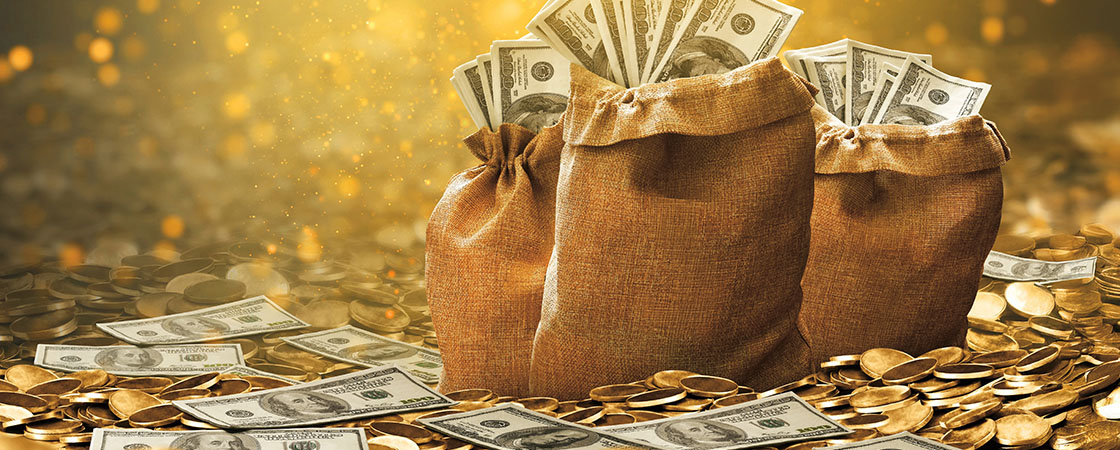

Three burlap bags overflow with paper currency and sit among scattered bills and gold coins
Shutterstock.com

The History of Money

There’s more to it than cash and coins. How did we go from trading chickens to tapping phones?

By Mary Kate Frank
From the September 2026 Issue

Learning Objective: Students will synthesize key ideas from two informational texts.

Lexiles: 870L, 760L

Standards

Story Navigation

Download and Print

The History of Money

There’s more to it than cash and coins. How did we go from trading chickens to tapping phones?

What if your allowance came in the form of a massive rock? Hundreds of years ago, people on the island of Yap in the Pacific Ocean used giant stone discs as money. Many of the discs were taller than a person. Some weighed more than a car! Most never moved at all. The community simply agreed on who owned them.

That may sound strange, but money has taken a lot of unusual forms throughout history. People have used shells, cows, beads, and even whale teeth to buy and trade. In fact, money can be almost anything as long as people agree it has value. So how did we get from these early forms of currency to the dollars in your wallet—or the tap of your phone?


What if your allowance came in the form of a massive rock? The island of Yap is in the Pacific Ocean. Hundreds of years ago, the people there used giant stone discs as money. Many of the discs were taller than a person. Some weighed more than a car! Most never moved at all. The community simply agreed on who owned them.

That may sound strange. But money has taken many unusual forms throughout history. People have used shells, cows, beads, and even whale teeth to buy and trade. In fact, money can be almost anything. People just have to agree it has value. So how did we get from these early forms of currency to the dollars in your wallet—or the tap of your phone?

Deal or No Deal?

Deal or No Deal?

Shutterstock.com

These giant stone discs were once used as money on the island of Yap.

For most of human history, there was no such thing as money. If you needed something, you traded for it. A farmer with extra wheat might swap with a neighbor for eggs or a chicken. That’s called bartering—and if you’ve ever traded snacks with a friend, you’ve done it too.

But bartering presented a big problem: Both people had to want what the other had at exactly the same time. If the chicken owner didn’t need your wheat, there was no deal.

So people began using objects that people widely agreed were valuable. Most of this early money came from nature. In Africa, Asia, and the South Pacific, cowrie shells worked well because they were small, durable, and hard to fake. In other places, people used livestock or chunks of gold and silver. Precious metals (rare metals like gold, silver, and platinum) became especially popular because they could be divided into smaller amounts. But you had to weigh them out every time you bought something, and that was tedious. Imagine waiting in line for a taco while someone measured out lumps of silver!

For most of human history, there was no such thing as money. If you needed something, you traded for it. A farmer might swap extra wheat for eggs or a chicken from another farmer. That’s called bartering. If you’ve ever traded snacks with a friend, you’ve done it too.

But with bartering, both people had to want what the other had at exactly the same time. If the chicken owner didn’t need your wheat, there was no deal.

So people began using objects that the community agreed were valuable. Most of this early money came from nature. In Africa, Asia, and the South Pacific, people used cowrie shells. They were small and hard to fake. 

In other places, people used livestock or chunks of precious metals, like gold, silver, and platinum. They were often used because they could be divided into smaller amounts. But you had to weigh them every time you bought something. That was tedious. Imagine waiting in line for a taco while someone measured out lumps of silver!

Change Makers

Change Makers

Around 600 B.C., people in a kingdom called Lydia (in what is now Türkiye) came up with a faster way to pay. Craftsmen melted metal and turned it into ready-to-use pieces of standard weight: coins. Each coin was stamped with a roaring lion’s head, the symbol of Lydia’s king. That stamp acted like a guarantee. It told people the coin was real—and could be trusted.

Coins were a huge hit. Other kingdoms soon began minting their own. Later, the Romans used coins across a vast empire. Trade became faster, easier, and more reliable.

Still, metal money wasn’t perfect. It was quite heavy. Fill your pockets with enough coins and you’ll get a decent workout. More than a thousand years would pass before a lighter alternative appeared—all the way in China.

In what is now called Türkiye, there was a kingdom called Lydia. Around 600 B.C., people there came up with a faster way to pay. Craftsmen melted metal. They turned it into pieces of standard weight: coins. Each coin was stamped with a roaring lion’s head. It was the symbol of Lydia’s king.

That stamp told people the coin was real. It could be trusted.

Coins were a huge hit. Other kingdoms soon began minting coins. Later, the Romans used coins across a vast empire. Trade became faster, easier, and more reliable.

Still, metal money wasn’t perfect. It was heavy. But a thousand years later, a lighter alternative appeared—all the way in China.

Paper Trail

Paper Trail

During the Tang Dynasty (618-907 A.D.), merchants in China came up with a clever fix for heavy copper coins. People could hand them over and receive a paper receipt instead. Later they could trade that receipt back for the coins.

Paper money went even further during the Song Dynasty (960-1279 A.D.). China was growing and becoming very wealthy, and there weren’t enough coins to go around. So the government began issuing paper money made from the bark of mulberry trees.

Under the law, people had to accept the notes as payment, just like coins. Counterfeiting was taken very seriously. Some early paper notes carried terrifying warnings: Making fake money could cost you your head. Yikes!

It took centuries for paper money to catch on in the West. At first, paper bills were really more like promises. They could be exchanged for something valuable, such as gold, stored elsewhere.

Over time, that changed. Countries including the United States stopped tying their money to gold. Today a dollar bill isn’t valuable because it can be traded for a chunk of metal. It has value because people trust it does.

During the Tang Dynasty (618-907 A.D.), merchants in China came up with a fix for heavy copper coins. People could hand the coins over and in exchange, they got a paper receipt. Later they could trade that receipt back for the coins. China grew during the Song Dynasty (960-1279 A.D.). It became very wealthy. There weren’t enough coins to go around. So the government began issuing paper money.

Under the law, people had to accept the notes as payment, just like coins. Counterfeiting was taken seriously. Some early paper notes had warnings: Making fake money could cost you your head. Yikes!

It took centuries for paper money to catch on in the West. At first, paper bills were really more like promises. They could be exchanged for something valuable, such as gold, stored elsewhere.

Over time, that changed. Countries—including the United States—stopped tying their money to gold. Today a dollar bill isn’t valuable because it can
be traded for a chunk of metal. It has value because people trust it does.

Leading the Charge

Leading the Charge

Shutterstock.com

People in medieval Italy paid with hunks of Parmesan cheese!

Money had been changing for thousands of years. But the next big shift wasn’t about what money was made of—it was about whether you needed to carry it at all. 

According to a famous story, the modern credit card was born out of an embarrassing event in New York City. In 1949, businessman Frank McNamara took clients out to eat—then realized he had forgotten his wallet. The incident inspired McNamara to invent a way to eat now, pay later. It was called the Diners Club card.

The idea was simple: Instead of paying cash at the end of a meal, cardholders could charge it using a (cardboard!) card. The credit card company covered the bill, and the customer paid later.

The first Diners Club cards, issued in 1950, could be used only at restaurants, but it didn’t take long for other companies and banks to create credit cards that worked elsewhere. Soon people could buy almost anything without cash.

That convenience came with a catch, though. Credit cards charge interest—meaning if you don’t pay your full bill each month, the amount you owe keeps growing. Today Americans owe about 

$1.28 trillion in credit card debt.

The next big shift wasn’t about what money was made of. It was about whether you needed to carry it at all.

According to a famous story, the modern credit card was born out of an embarrassing event in New York City. In 1949, businessman Frank McNamara took clients out to eat. But he forgot his wallet. The incident inspired McNamara to invent a way to eat now, pay later. It was called the Diners Club card.

The idea was simple. You didn’t pay cash at the end of a meal. Instead, cardholders could charge it using a (cardboard!) card. The credit card company covered the bill. The customer paid later.

The first Diners Club cards were issued in 1950. They could be used only at restaurants. But then other companies and banks created credit cards that worked elsewhere. Soon people could buy almost anything without cash.

But credit cards charge interest. If you don’t pay your full bill each month, the amount you owe keeps growing. Today Americans owe about $1.28 trillion in credit card debt.

Now You See It, Now You Don’t

Now You See It, Now You Don’t

Money had already shrunk from metal coins to paper bills to a thin plastic card. Next it became almost invisible.

Beginning in the 1990s, the internet changed the way people shop—and the way they pay. Companies like PayPal helped move money between strangers online, then smartphones put payment tools in people’s pockets. Later, apps like Venmo and Apple Pay made it possible to pay with a quick tap. Today many people buy things without ever touching paper money or coins.

In fact, much of modern money isn’t something you can hold at all. There is an estimated $123 trillion out there in the world, but most of it exists as numbers in bank accounts and computer systems. 

That’s a far cry from giant rocks!

Money had shrunk from metal coins to paper bills to a thin plastic card. Next it became almost invisible.

Beginning in the 1990s, the internet changed the way people shop—and the way they pay.

Companies like PayPal helped move money between strangers online. Then smartphones put payment tools in people’s pockets. Later, apps like Venmo and Apple Pay made it possible to pay with a quick tap. Today many people buy things without ever touching paper money or coins.

In fact, much of modern money isn’t something you can hold at all.

There is an estimated $123 trillion out there in the world. But most of it exists as numbers in bank accounts and computer systems.

That’s a far cry from giant rocks!

Thank you to Scott Wolla of the Federal Reserve Bank of St. Louis for his help with this article.

Thank you to Scott Wolla of the Federal Reserve Bank of St. Louis for his help with this article.

Money's Next Move 

Here’s how the way we pay is changing—and what we might gain and lose along the way.

Prostock-studio/Alamy Stock Photo (teen); Shutterstock.com (all other images)

BURGER HUT PURCHASE


1 Burger   $9.99

1 Iced Tea   $3.00 1 French Fries   $3.50

Total   $16.49


CONFIRMATION:

SUCCESSFUL PAYMENT

On November 12, 2025, America bid farewell to one of its oldest forms of currency. At the U.S. Mint in Philadelphia, an official pressed the very last new penny, ending a run that had lasted more than 200 years. 

Why retire the penny? The government was losing money on each one. It cost nearly 3.7 cents to make a one-cent coin.

The end of the penny points to a bigger change. Physical money is fading from everyday life as technology has made it possible to get just about anything without ever touching the green stuff. We can shop online and in stores with credit cards, debit cards, and apps on our phones. Already, people ages 18 to 24 use their phones for 45 percent of all payments, according to the Federal Reserve, our country’s central bank.

“The era of cash is rapidly drawing to an end,” says economist Eswar Prasad, author of The Future of Money. “Digital payments are much easier to use, cheaper for businesses, and avoid a lot of hassles associated with handling and managing cash.” 

But if money is no longer something you put in your pocket (or your piggy bank), what exactly is it?

On November 12, 2025, America bid farewell to one of its oldest forms of currency. At the U.S. Mint in Philadelphia, an official pressed the very last new penny. It ended a run that had lasted more than 200 years.

Why retire the penny? The government was losing money on each one. It cost nearly 3.7 cents to make a one-cent coin.

The end of the penny points to a bigger change. Physical money is fading from everyday life. Technology has made it possible to buy just about anything without ever touching the green stuff. We can shop online and in stores with credit cards, debit cards, and apps on our phones. People ages 18 to 24 use their phones for 45 percent of all payments, according to the Federal Reserve. (That’s our country’s central bank.)

“The era of cash is rapidly drawing to an end,” says economist Eswar Prasad, author of The Future of Money. “Digital payments are much easier to use, cheaper for businesses, and avoid a lot of hassles associated with handling and managing cash.”

But if money is no longer something you put in your pocket (or your piggy bank), what exactly is it?

Digital Dollars

Digital Dollars

Some countries think they have the answer: digital cash. 

This new form of money is called a central bank digital currency, or CBDC. Cash is simple: You have a $10 bill, you hand it to someone, and you’re done. There’s no app, no bank, and no middleman involved. CBDCs would make digital money work the same way. Instead of a paper bill in your pocket, you’d have a digital token on your phone—issued directly by the government, not a bank.

As of mid-2025, 72 countries were in advanced stages of developing digital cash. In China, people already fork over digital yuan to pay for things from bus rides to takeout. So far, it’s been used to make more than $1 trillion worth of transactions. Other countries like the Bahamas, Jamaica, and Nigeria have also launched digital currencies. 

Supporters say “cashless cash” could make payments faster and cheaper. It would also help people who don’t have bank accounts pay electronically. But critics worry about security. Today money is spread across thousands of banks, which means that a hack into one bank doesn’t bring down the whole system. A CBDC would keep a whole country’s digital cash in one place, making it one very big target. What if hackers cracked the system and made off with piles of digital loot?

Some countries say digital cash is the answer.

This new form of money is called a central bank digital currency, or CBDC. Cash is simple. You have a $10 bill. You hand it to someone. You’re done. There’s no app, no bank, and no middleman involved. CBDCs would make digital money work the same way. Instead of a paper bill in your pocket, you’d have a digital token on your phone—issued directly by the government, not a bank.

As of mid-2025, 72 countries were in advanced stages of developing digital cash. In China, people use digital yuan to pay for things like bus rides and takeout. So far, it’s been used to make more than $1 trillion worth of transactions. Other countries like the Bahamas, Jamaica, and Nigeria have also launched digital currencies.

Supporters say “cashless cash” could make payments faster and cheaper. It would also help people who don’t have bank accounts pay electronically. But critics worry about security. Today money is spread across thousands of banks. A hack into one bank doesn’t bring down the whole system. A CBDC would keep a whole country’s digital cash in one place. It would be one very big target. What if hackers cracked the system and made off with piles of digital loot?

Face First

Face First

Shutterstock.com

"It's been a good run!"

Perhaps the future of money is, well, you—or at least parts of your body. 

Already, at several Whataburger restaurants and other fast-food chains, people are buying fries with their faces. To sign up, a customer takes a selfie and links it to a payment method, like a bank account or a credit card. A computer scans the image and turns it into a kind of digital face map based on unique features, like the distance between the eyes. Later, when it’s time to pay, the customer simply looks at a camera near the register. If the face matches, the payment goes through—similar to how a face unlocks a smartphone.

The system has been shown to speed things up. Pay-by-face can save up to a minute and a half at checkout!

Amazon tried something similar with hands by installing palm scanners at all of its Whole Foods locations. They didn’t take off, though, and the futuristic payment system was recently shut down because too few people used it. 

These new ways to pay may be more efficient. But they come with hidden costs. For one thing, digital payments make it easier to spend without thinking. Studies have found that paying with cash hits your brain differently than tapping a phone. You see the money you earned from babysitting or mowing lawns leave your hand, and that makes the loss feel real. Scientists call this the “pain of paying.” But when you tap, spending becomes quick and invisible. That can trigger impulse buys.

Perhaps the future of money is you—or at least parts of your body.

Already, at several Whataburger restaurants and other fast-food chains, people are buying fries with their faces. To sign up, a customer takes a selfie and links it to a payment method, like a bank account or a credit card. Later, when it’s time to pay, the customer simply looks at a camera near the register. If the face matches, the payment goes through—similar to how a face unlocks a smartphone.

This system speeds things up. Pay-by-face can save up to a minute and a half at checkout!

Amazon tried something similar with hands at its Whole Foods stores. But the palm readers didn’t take off. Not many people used them. So the futuristic payment system was shut down.

These new ways to pay may be more efficient. But digital payments make it easier to spend without thinking. Studies have found that paying with cash hits your brain differently than tapping a phone. You physically see the money you earned from babysitting or mowing lawns leave your hand. That makes the loss feel real. Scientists call this the “pain of paying.” But when you tap, spending becomes quick and invisible. That can trigger impulse buys and overspending.

Big Questions 

Big Questions

Cash also offers something most other payments do not: a measure of anonymity. In a future where money exists fully on screens, more of what we buy could leave a digital trail. That “raises big questions about privacy,” says Prasad.

And then there’s the technology itself. What happens if the system crashes? Or a thief steals your identity? After all, it’s much easier to replace a credit card than your face! That may be the ultimate question about the future of money: As paying gets easier, what might we be giving up in return?

Cash also offers something most other payments do not: some anonymity. In a digital money future, more of what we buy could leave a digital trail. That “raises big questions about privacy,” says Prasad.

And then there’s the technology itself. What happens if the system crashes? Or if a thief steals your identity? After all, it’s much easier to replace a credit card than your face! That may be the ultimate question about the future of money: As paying gets easier, what might we be giving up in return?

Icon of a lightbulb

Writing Prompt

Write a speech pitching a new form of currency to your class. What is it, and why will it work? Use evidence from both texts to support your answer.


Writing Prompt

Write a speech pitching a new form of currency to your class. What is it, and why will it work? Use evidence from both texts to support your answer.


This article was originally published in the September 2026 issue.

This article was originally published in the September 2026 issue.

Slideshows (1)
Audio ()
Activities (3)
Quizzes (1)
Answer Key (1)
Slideshows (1)
Audio ()
Activities (3)
Quizzes (1)
Answer Key (1)
Text-to-Speech