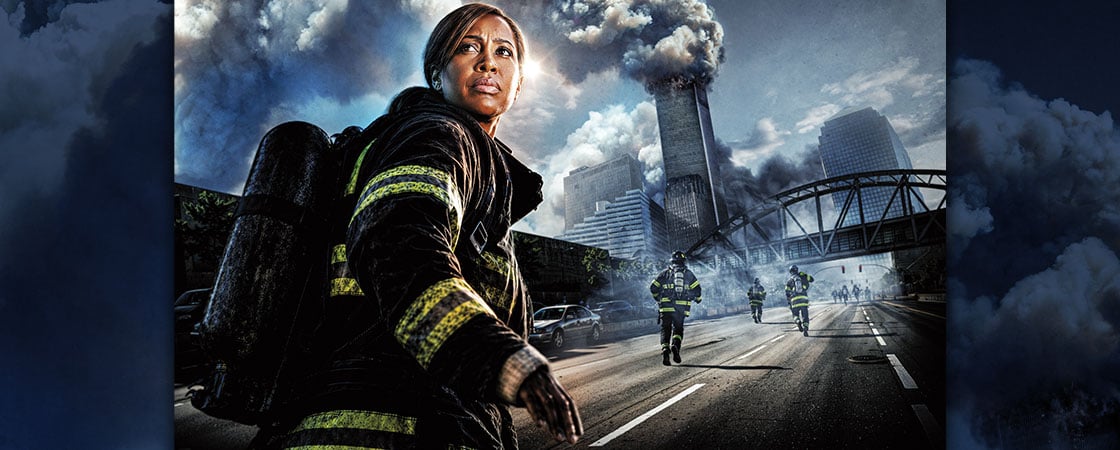

A firefighter stands on a city street as smoke rises from tall buildings in the background
Art By Randy Pollak

Into the Choking Smoke

On September 11, 2001, hundreds of first responders rushed toward disaster as others fled. This is firefighter Regina Wilson’s incredible story of friendship, luck, loss, and healing.

By Anna Starecheski
From the September 2026 Issue

Learning Objective: Students will analyze the development of central ideas in a narrative nonfiction text.

Lexiles: 1010L, 800L

Standards

Download and Print

We’re under attack! Run! Run!” 

When firefighter Regina Wilson heard those words crackling through her radio, she didn’t hesitate.

She took off. 

Wilson sprinted to the fire engine parked nearby, pulling a mask over her nose and mouth as a massive cloud of dense black smoke rushed down the street toward her. 

She had just enough time to wonder if a 110-story skyscraper was about to crush the engine—then everything went black.

The smoke engulfed her, and all she could hear was a deafening roar. It sounded like a waterfall combined with a speeding train, seemingly coming from everywhere all at once.

It was September 11, 2001, and lower Manhattan, typically a vibrant area of New York City, was full of terrified people running for their lives. But Wilson and her fellow first responders had a job to do. So instead of fleeing the disaster unfolding in front of them, these courageous firefighters, police officers, and paramedics rushed toward it.

Most of them likely shared the same thought that was racing through Wilson’s mind.

Will I make it out alive?

We’re under attack! Run! Run!”

When firefighter Regina Wilson heard the dispatcher’s words crackling through her radio, she didn’t hesitate.

She took off.

Wilson sprinted to the fire engine parked nearby, pulling a mask over her nose and mouth as a huge cloud of black smoke rushed down the street toward her and the other firefighters.

For a moment, she wondered if a 110-story skyscraper was about to crush the engine. Then everything went black.

The smoke engulfed her. She heard a deafening roar. It sounded like a waterfall combined with a speeding train. It seemed to come from everywhere all at once.

It was September 11, 2001. Lower Manhattan, an area of New York City, was full of terrified people running for their lives. But Wilson and her fellow first responders had a job to do. So they didn’t flee the disaster. Instead, these courageous firefighters, police officers, and paramedics rushed toward it.

Most of them likely had the same thought that was racing through Wilson’s mind at that moment. 

Will I make it out alive?

Jeff Overs/BBC News & Current Affairs via Getty Images

The Towers

At the time they were completed in 1973, the Twin Towers were the tallest buildings in the world, stretching more than 1,300 feet into the air. The skyscrapers were part of the World Trade Center in lower Manhattan, a vast complex that housed hundreds of offices, restaurants, stores, and a hotel.

A Heroic Career

A Heroic Career

Courtesy of Regina Wilson

John Chipura (left) and Regina Wilson both worked at Engine 219/Ladder 105 in Brooklyn.

Growing up, Wilson hadn’t dreamed of becoming a firefighter. As a young adult, she embarked on a career in accounting but became interested in firefighting when she found out how few women and Black people there were in the Fire Department of the City of New York (FDNY). Why aren’t we here? Wilson remembers thinking. Why aren’t we in this heroic career?

So, in her late 20s, she started training and studying for the demanding physical and written tests she would have to pass to become a firefighter. When Wilson officially joined the FDNY in 1999, there were 300 people in her class. Yet she was one of only seven Black people—and the only woman. It was often intimidating to be in the minority, but Wilson hoped that her presence would inspire others who looked like her to join. 

By September 11, 2001, Wilson had been a firefighter for two years. Around 8 a.m. that morning, she was finishing a 15-hour overnight shift at the Engine 219/Ladder 105 firehouse in Brooklyn (see map) when she was asked if she could stay on for the day shift. Eager to earn some overtime pay and extra experience, she agreed and was assigned to Ladder 105—a vehicle with a ladder and tools for busting into flaming buildings. 

Wilson’s friend John Chipura, however, asked her if she would swap jobs with him. He was assigned to Engine 219, which is a vehicle that carries hundreds of gallons of water and long hoses for putting out fires. Chipura wanted more experience on the truck, so Wilson agreed to the trade, happy to grant a favor to her good friend.

After all, Chipura had helped her out countless times. Wilson says being a firefighter wasn’t always easy for her as a Black woman. She often felt left out of the camaraderie of the firehouse. But Chipura was different, stepping up to show Wilson the ropes and always treating her with respect. She remembers spending hours chatting about their lives—Chipura wanted to have a wife and kids someday, and they laughed together as he shared stories of disastrous first dates.

On that sunny September morning, the firefighters at Engine 219/Ladder 105 were waiting to see what the day had in store for them when Wilson heard exclamations of shock and terror coming from the kitchen, followed by an eerie silence. Curious, she went to see what was happening. Her co-workers were watching what she thought was a movie: On-screen were New York City’s Twin Towers, two of the most recognizable buildings in the world—and one had a gaping, flaming hole in its side. 

Growing up, Wilson hadn’t dreamed of becoming a firefighter. As a young adult, she started a career in accounting. But then she learned that few women and Black people were in the Fire Department of the City of New York (FDNY). Why aren’t we here? Wilson remembers thinking. Why aren’t we in this heroic career?

So, in her late 20s, she started training and studying for the demanding physical and written tests she would have to pass to become a firefighter. When Wilson officially joined the FDNY in 1999, there were 300 people in her class. Yet she was one of only seven Black people—and the only woman. It was often intimidating to be in the minority. But Wilson hoped that she would inspire others who looked like her to join.

By September 11, 2001, Wilson had been a firefighter for two years. Around 8 a.m. that morning, she was finishing a 15-hour overnight shift at the Engine 219/Ladder 105 firehouse in Brooklyn (see map). She was asked to stay for the day shift. She was eager to earn some overtime pay and extra experience. So she agreed. She was assigned to Ladder 105—a truck with a ladder and tools for busting into flaming buildings.

Wilson’s friend John Chipura asked her if she would swap jobs with him. He was assigned to Engine 219, a vehicle that carries hundreds of gallons of water and long hoses for putting out fires. Chipura wanted more experience on the truck. Wilson agreed to the trade, happy to grant a favor to her good friend.

Chipura had helped her out countless times. Wilson says being a firefighter wasn’t always easy for her as a Black woman. She often felt left out of the camaraderie of the firehouse. But Chipura was different. He showed Wilson the ropes. He always treated her with respect. They chatted about their lives. Chipura wanted to have a wife and kids someday. They laughed together as he shared stories of disastrous first dates.

On that sunny September morning, the firefighters at Engine 219/Ladder 105 were waiting to see what the day had in store for them. Then Wilson heard exclamations of shock and terror coming from the kitchen, followed by an eerie silence. She went to the kitchen, where it seemed like her co-workers were watching a movie. On-screen were New York City’s Twin Towers, two of the most recognizable buildings in the world. One tower had a gaping, flaming hole in its side. 

Jim McMahon/Mapman ®

Under Attack

Under Attack

Wilson and the rest of the world would soon understand that this was no movie. The United States was under attack by a terrorist group called Al Qaeda. (A terrorist is a person who uses violence to scare people and try to force changes in government or society.) The group was based in Afghanistan and led by a man named Osama bin Laden.

Bin Laden and his supporters were opposed to the influence that the United States and other Western countries had in the world. Al Qaeda had been planning the 9/11 attacks for years, targeting buildings that symbolized America’s military, government, business, and culture.

That morning, 19 members of Al Qaeda hijacked four airplanes and turned them into flying weapons. One hit the Pentagon, the U.S. military headquarters near Washington, D.C. Another crashed into a field in Pennsylvania (many believe it was headed for the U.S. Capitol). 

The two other planes were flown into the Twin Towers, in the heart of New York City’s financial district. (That’s the part of a city where many banks and other businesses are located.) These enormous skyscrapers were the centerpiece of a massive office and shopping complex called the World Trade Center, which included seven buildings and an underground shopping mall. About 50,000 people went to work there each day, and 70,000 more visited or passed through. For many, these iconic buildings symbolized the United States’ global power. It was hard to believe that they could be made so vulnerable in an instant.

But this was no movie. The United States was under attack by a terrorist group called Al Qaeda. (A terrorist is a person who uses violence to scare people and try to force changes in government or society.) The group was based in Afghanistan and led by a man named Osama bin Laden.

The United States and other Western countries had a lot of power in the world and bin Laden did not like that. Al Qaeda had been planning the 9/11 attacks for years. He targeted buildings that symbolized America’s military, government, business, and culture.

That morning, 19 members of Al Qaeda hijacked four airplanes. They turned them into flying weapons. One hit the Pentagon, the U.S. military headquarters near Washington, D.C. Another crashed into a field in Pennsylvania. Many believe it was headed for the U.S. Capitol.

The two other planes were flown into the Twin Towers, in the heart of New York City’s financial district. (A financial district is where many banks and other businesses are located in a city.) These two enormous skyscrapers were part of the World Trade Center. It included seven buildings and an underground shopping mall. About 50,000 people went to work there each day, and 70,000 more visited or passed through. For many, these iconic buildings symbolized the United States’ global power. It was hard to believe that they could be made so vulnerable in an instant.

Spencer Platt/Getty Images (top); Amy Sancetta/AP Images (middle)

The Terror

The Twin Towers were designed to withstand powerful forces, but after being hit by planes on the morning of September 11, fires burned so hot that the buildings’ steel frames melted. Witnesses described intense booming sounds, a sharp, stinging odor, and a scene of utter chaos as the towers collapsed.

Into the Chaos

Into the Chaos

Back at the firehouse, Wilson and her colleagues started preparing to be called to the World Trade Center. They loaded up the truck and the engine with all the supplies they thought they might need. Wilson remembers thinking, How are we going to fight a fire that’s 100 stories in the air?

Chipura’s truck was called out first, followed by Wilson’s engine. The engine raced through the streets of Brooklyn and headed to the Brooklyn Battery Tunnel, which would take them under the East River into lower Manhattan. They were halfway through the tunnel when a powerful blast of wind came roaring through, shaking the 20-ton engine with such intense force that they had to stop. Wilson had never felt anything like it. She would learn later that the South Tower had just collapsed, sending a strong gust of debris-filled air in all directions. 

As the engine continued through the tunnel, Wilson saw a foggy light on the other side. She had a moment to be glad that they weren’t trapped before they emerged into total chaos. The air was full of smoke, and thousands of sheets of paper from the offices that had been in the South Tower rained down from the sky. “It looked like a blizzard,” Wilson remembers.

Hundreds of people were running down the street, and many more walked together, holding each other up as they escaped. They looked like ghosts, covered from head to toe in ash and debris from the explosion. Wilson helped people rinse the grit out of their eyes and directed them to walk through the tunnel to Brooklyn. Then she and her fellow firefighters started making their way toward the World Trade Center’s remaining tower, where they knew the most help would be needed. That’s when a terrifying new noise echoed through the streets. 

BOOM! BOOM! BOOM! 

It was the sound of the North Tower collapsing floor by floor. That’s when Wilson heard the voice on the radio telling her to run.

As the black, choking smoke swirled around her and debris pelted her from all sides, Wilson wondered if she was about to die—until her mind turned to Chipura and the other men on Ladder 105. They had left 40 minutes before she did. Could they have been inside one of the towers?

Back at the firehouse, Wilson and her colleagues started preparing to be called to the World Trade Center. They loaded up the truck and the engine with supplies. Wilson remembers thinking, How are we going to fight a fire that’s 100 stories in the air?

Chipura’s truck was called out first, followed by Wilson’s engine. The engine raced through the streets of Brooklyn. It headed to the Brooklyn Battery Tunnel, which would take them under the East River into lower Manhattan. They were halfway through the tunnel when a powerful blast of wind came roaring through. It shook the 20-ton engine with such intense force that they had to stop. Wilson had never felt anything like it. She would learn later that the South Tower had just collapsed, sending a strong gust of debris-filled air in all directions.

As the engine continued through the tunnel, Wilson saw a foggy light on the other side. She was glad they hadn’t been trapped. Then they emerged into total chaos. The air was full of smoke. Thousands of sheets of paper from the offices that had been in the South Tower rained down from the sky. 

“It looked like a blizzard,” Wilson remembers.

Hundreds of people were running down the street. Many more walked together, holding each other up as they escaped. They were covered from head to toe in ash and debris from the explosion. Wilson helped people rinse the grit out of their eyes. She told them to walk through the tunnel to Brooklyn. Then she and her fellow firefighters started making their way toward the World Trade Center’s North tower to help. That’s when a terrifying new noise echoed through the streets.

BOOM! BOOM! BOOM!

It was the sound of the North Tower collapsing floor by floor. That’s when Wilson heard the voice on the radio telling her to run.

Black, choking smoke swirled around her. Debris pelted her from all sides. Wilson wondered if she was about to die. Then her mind turned to Chipura and the other men on Ladder 105. They had left 40 minutes before she did. Could they have been inside one of the towers?

Acts of Kindness

Acts of Kindness

Patti McConville/Alamy Stock Photo

After the smoke cleared, Wilson and the other first responders did the only thing they could do: They stayed sharply focused on their jobs. “We didn’t even know where to start,” Wilson says. They quickly found that water pipes had been damaged in the collapse, so the firefighters couldn’t get water from hydrants. To improvise, they dragged heavy hoses to the river a few blocks away to pump out water to fight the dozens of fires that raged in the area. 

Throughout it all, Wilson prayed that Chipura and her other co-workers were still alive. At one point, she took a moment to call her family. “I told them I loved them, and that if I died, I would have died doing what I loved,” she says.

Finally, late that night, Wilson returned to her firehouse. Ladder 105 hadn’t yet returned, and Wilson desperately hoped they were simply still hard at work at the Trade Center. By the time she staggered through the door, she was so exhausted that she lay down on the floor and fell asleep immediately. 

When Wilson woke up the next morning, Chipura and the other men on the truck still weren’t there. Nobody could reach them. 

Meanwhile, neighbors were gathering to see how they could help. Some brought meals. A woman who lived nearby brought Wilson hairpins, knowing she wouldn’t be able to go home anytime soon. 

These small acts of kindness meant everything after such a tragic day. And the care the community showed would help Wilson and her colleagues after they received some devastating news: Ladder 105 had been helping evacuate people from the South Tower when the building collapsed. 

They were all presumed dead.

After the smoke cleared, Wilson and the other first responders stayed focused on their jobs. “We didn’t even know where to start,” Wilson says. The water pipes had been damaged in the collapse. The firefighters couldn’t get water from hydrants. So they dragged heavy hoses to the river a few blocks away. They pumped out water to fight the dozens of fires that raged in the area. 

Wilson prayed that Chipura and her other co-workers were still alive. At one point, she took a moment to call her family. “I told them I loved them, and that if I died, I would have died doing what I loved,” she says.

Finally, late that night, Wilson returned to her firehouse. Ladder 105 hadn’t yet returned. Wilson desperately hoped they were simply still hard at work at the Trade Center. She was so exhausted that she lay down on the floor and fell asleep immediately.

When Wilson woke up the next morning, Chipura and the other men on the truck still weren’t there. Nobody could reach them. 

Meanwhile, neighbors were gathering to help. Some brought meals. A woman who lived nearby brought Wilson hairpins, knowing she wouldn’t be able to go home anytime soon.

These small acts of kindness meant everything after such a tragic day. And the care the community showed would help Wilson and her colleagues after they received some devastating news. Ladder 105 had been helping evacuate people from the South Tower when the building collapsed. 

They were all presumed dead.

Rick Maiman/Polaris/Newscom (top); Shawn Baldwin/AP Images (middle)

The Heroes

Wilson was just one of hundreds of firefighters, police officers, and other first responders who rushed to the scene of the attacks. With their help, more than 25,000 people made it out of the towers before they collapsed. Twenty more were rescued from the rubble over the next 27 hours.

The Long War

The Long War

The 9/11 terrorist attacks shocked the world. Nearly 3,000 people were killed, including 343 members of the FDNY. 

In the days and weeks following the attacks, the U.S. prepared to strike back, determined to hunt down Osama bin Laden. He and the other members of Al Qaeda were protected by the Taliban, an extremist group that controlled Afghanistan’s government. (An extremist is a person who has strong beliefs and may support harmful actions to promote those beliefs.)

Less than a month after the attacks, the U.S. invaded Afghanistan, starting a war that would last 20 years—the longest conflict in American history. The events of 9/11 also changed life in the U.S. in many ways. New laws and procedures were put in place to protect against future attacks. Airport security was overhauled, and a new agency called the Department of Homeland Security was created. Americans’ sense of safety in their daily lives had been shaken to its core.

The 9/11 terrorist attacks shocked the world. Nearly 3,000 people were killed, including 343 members of the FDNY.

In the days and weeks following the attacks, the U.S. prepared to strike back, determined to hunt down Osama bin Laden. He and the other members of Al Qaeda were protected by the Taliban, an extremist group. It controlled Afghanistan’s government. (An extremist is a person who has strong beliefs and may support harmful actions to promote those beliefs.)

Less than a month after the attacks, the U.S. invaded Afghanistan. The war would last 20 years—the longest conflict in American history. The events of 9/11 also changed life in the U.S. in many ways. New laws and procedures were put in place to protect against future attacks.

Airport security was overhauled. A new agency called the Department of Homeland Security was created. Americans’ sense of safety in their daily lives had been shaken to its core.

Spencer Platt/Getty Images

The Helpers

The Helpers

The FDNY’s job wasn’t over once the fires were put out. Firefighters also assisted with the search and recovery efforts at the former site of the Twin Towers, by then known as Ground Zero. The rubble was piled up to nine stories tall in some places. It all had to be cleared away and searched for survivors—and also for those who had not survived. 

Through the end of 2001, Wilson spent her days at “the pile,” as many called it. It was heartbreaking, exhausting work, but even on their days off, Wilson and many of her fellow firefighters showed up to help. They walked past fences covered with posters of missing people—those who had been in the area during the attacks and hadn’t yet been found—including the men from Ladder 105. Distraught civilians flocked to the site, leaving candles and looking for ways to help.

That’s one of the most important lessons Wilson took away from that time: It’s in our nature to care for and help our fellow humans. The kind of hatred that led the terrorists to do what they did isn’t natural—it’s learned. Deep down, Wilson says, “people have this heartfelt desire to help others. That’s what we’re on this Earth for.”

The FDNY’s job wasn’t over once the fires were put out. Firefighters also assisted with the search and recovery efforts at the former site of the Twin Towers, by then known as Ground Zero. The rubble was piled up to nine stories tall in some places. It all had to be cleared away and searched for survivors—and for those who had not survived.

Through the end of 2001, Wilson spent her days at “the pile,” as many called it. It was heartbreaking, exhausting work. But even on their days off, Wilson and many of her fellow firefighters showed up to help. They walked past fences covered with posters of missing people—those who had been in the area during the attacks and hadn’t yet been found. The posters included the men from Ladder 105. Distraught civilians flocked to the site. They left candles. They looked for ways to help.

That’s one of the most important lessons Wilson took away from that time: It’s in our nature to care for and help our fellow humans. The kind of hatred that led the terrorists to do what they did isn’t natural—it’s learned. Deep down, Wilson says, “people have this heartfelt desire to help others. That’s what we’re on this Earth for.” 

Michael M. Santiago/Getty Images

The Hope

Twenty-five years later, the former Ground Zero site now hosts a memorial (above), a museum, a new transit hub, and several office towers. They’re a powerful reminder of the city’s—and the country’s—resilience after the attacks. 

Honor and Remember

Honor and Remember

Alberto E. Rodriguez/Getty Images

Since 9/11, Wilson has found purpose in telling Chipura’s story. 

Today Wilson is still a proud member of the FDNY. The events of 9/11 haunt her, but she wants to make sure people remember more than just the horror of that day. “So many of us sacrificed so much,” she says. “I don’t want this to just be a page in a history book that gets turned and forgotten.”

In the years since 9/11, Wilson has dealt with survivor’s guilt. She struggles with the fact that if she hadn’t traded places with Chipura, she would have died instead—and he would have lived on. But she keeps talking about him and telling his story. “I want people to remember him,” she says. “He was a true hero—not only in the FDNY, but also in his previous careers in the police department and the military. Every time I say his name, he lives. That gives me comfort.”

Wilson also has a message for people like you who didn’t live through the events of 9/11. “Bad things happen all the time,” she says. “Sometimes you can control it; most of the time you can’t.”

Still, Wilson says, you can control how you react—and hold on to hope and kindness. “Because even after a dark day like September 11,” Wilson notes, “the sun still came out the next morning.”•

Today Wilson is still a proud member of the FDNY. The events of 9/11 haunt
her. But she wants to make sure people remember more than
just the horror of that day. “So many of us sacrificed so much,” she says. “I don’t want this to just be a page in a history book that gets turned and forgotten.”

In the years since 9/11, Wilson has dealt with survivor’s guilt. She struggles with the fact that if she hadn’t traded places with Chipura, she would have died instead—and he would have lived on. But she keeps talking about him and telling his story. “I want people to remember him,” she says. “He was a true hero—not only in the FDNY, but also in his previous careers in the police department and the military. Every time I say his name, he lives. That gives me comfort.”

Wilson also has a message for people like you who didn’t live through the events of 9/11. “Bad things happen all the time,” she says. “Sometimes you can control it; most of the time you can’t.”

Still, Wilson says, you can control how you react—and hold on to hope and kindness. “Because even after a dark day like September 11,” Wilson notes, “the sun still came out the next morning.”

Icon of a lightbulb

Writing Prompt

Regina Wilson says it’s in our nature to care for other humans. How does this story support that idea? Include details from the text in your response. 

Writing Prompt

Regina Wilson says it’s in our nature to care for other humans. How does this story support that idea? Include details from the text in your response. 

This article was originally published in the September 2026 issue.

This article was originally published in the September 2026 issue.

video (1)
Audio ()
Activities (3)
Quizzes (1)
Answer Key (1)
video (1)
Audio ()
Activities (3)
Quizzes (1)
Answer Key (1)
Text-to-Speech